
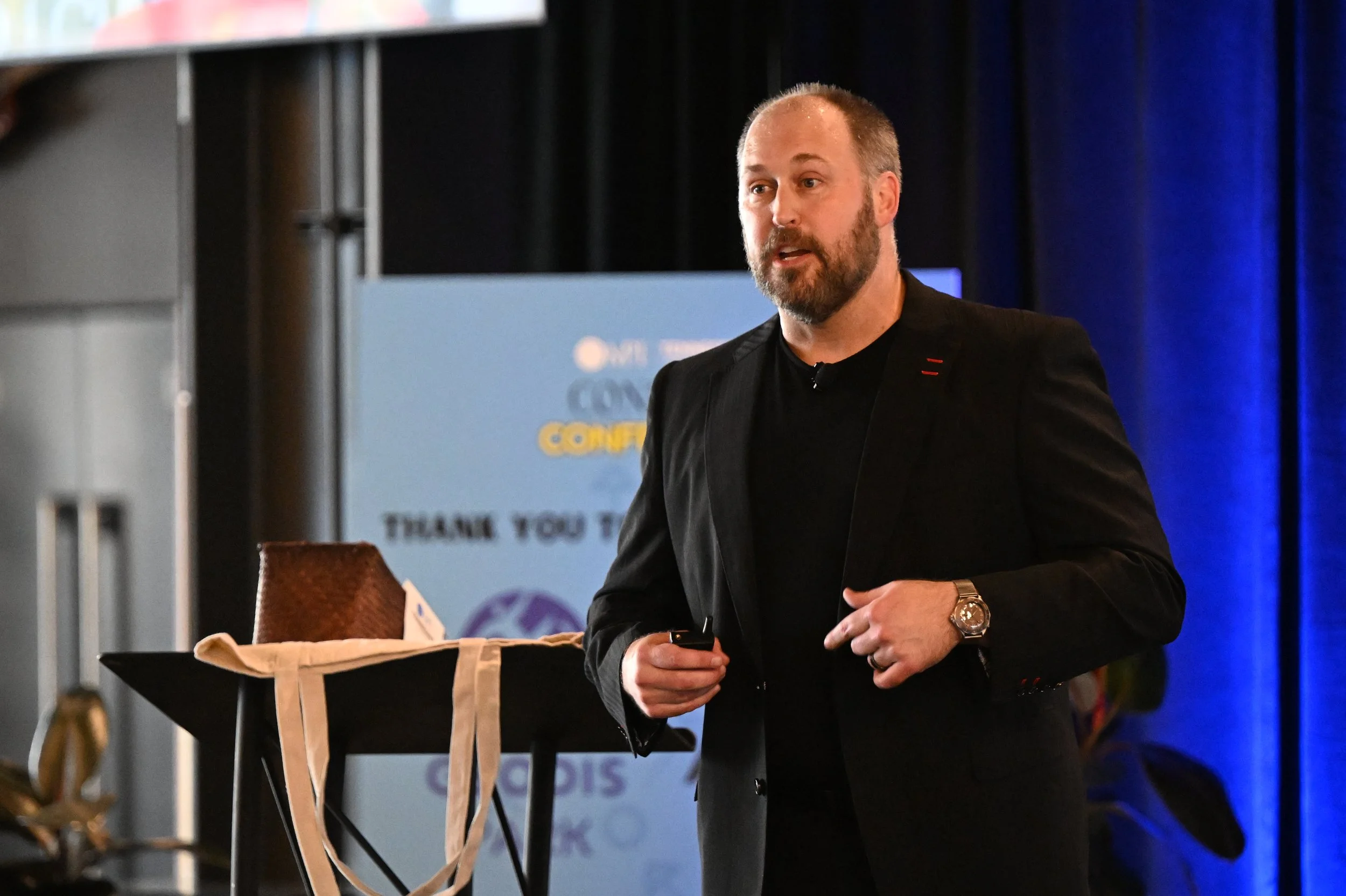
RESILIENT LEADERSHIP SERIES · Article 5 of 5
Jason Michaels ◆ 2026 ◆ 12 min read ◆ Resilience · Framework · Leadership
“This framework did not come from a research paper or a leadership retreat. It came from a hotel room in Saudi Arabia, from hospital visits in Kuwait City, from board meetings that lasted years, from the faces of soldiers who needed something only a show could give them. It is built from the inside of real pressure — not observed from a safe distance.”
Over the past four articles in this series, I have shared the experiences that shaped how I lead and how I understand resilience. A geopolitical crisis that cut short a military tour and forced me to get my team home from Saudi Arabia with no playbook. A decade of assembling and leading performers in conditions that test every assumption about what a team actually needs. A five-year institutional battle inside the International Brotherhood of Magicians that taught me what fear inside an organization really looks like — and how to fight it. And the understanding, forged in military cafeterias and base theaters across the Middle East, that purpose is not something you find in reflection but something you discover in the act of serving people who genuinely need what you have to give.
This final article is the synthesis. It is the framework I actually use — in my keynote programs, in my leadership of teams, and in my own life when the pressure arrives and the plan disappears. It is five lessons, in a specific sequence, that I believe represent the most honest and most practical map through the kind of difficulty that breaks leaders who are not prepared for it.
If this is the first article in this series you are reading, it will stand on its own. If you have read all four that preceded it, you will recognize the moments inside each lesson — because every step of this framework was forged in one of them.
Why Sequence Matters
I am often asked whether these five lessons are interchangeable — whether a leader can enter the framework at any point depending on what they need in a given moment. The honest answer is no. The sequence is not arbitrary. It reflects something real about how human beings actually move through difficulty.
You cannot talk about what you have not first identified. You cannot maintain perspective on something you have refused to acknowledge. And gratitude — genuine gratitude, not performed positivity — for something genuinely hard requires a degree of perspective that only becomes available after you have done the work that precedes it. Skipping steps does not accelerate healing. It delays it, because you eventually have to go back and do what you bypassed.
Think of these five lessons as a progression, not a menu. Each one opens the door to the next.
The Five-Lesson Framework — In Sequence
01 Identify the Struggle
Name what you are actually dealing with. This is the foundational step. Nothing that follows is possible without it.
02 Talk About It
Bring the struggle into language and into relationship. Speaking what you have named begins the process of normalizing it.
03 Have Compassion for Yourself
Extend to yourself the same grace you would extend to someone you love who was in the same situation.
04 Maintain Perspective
Place your struggle inside a larger frame. Acknowledge its real weight without allowing it to become the whole story.
05 Have Gratitude
Find — and mean — gratitude for the struggle itself. This is the hardest step, and it is only reachable after the four that precede it.
01 First Lesson
Identify the Struggle
The first step in resilience is the one most leaders resist the longest: naming the thing you are actually dealing with. Not the professional version of it, not the version you would describe in a status update or a board meeting — the real version. What is hard. What is frightening. What is costing you more than anyone around you knows.
I sat in a hotel room in Al Kharj, Saudi Arabia, on a night when the military base we were supposed to be sleeping on was locked down, when Israel had not yet attacked Iran but the tension was already unmistakable, and I spiraled. I started running through every possible way the situation could get worse. I jumped at sounds in the hallway. I was scared — genuinely, not abstractly scared — and I spent nearly an hour trying not to be before I finally did the thing that actually helped: I named it.
I was scared. The situation was genuinely uncertain. I was responsible for two other people in a foreign country with no playbook. That was the truth, and the moment I stopped managing it and simply acknowledged it, I could start moving through it rather than around it.
The discipline of identification is not weakness. It is the prerequisite for everything else. A leader who cannot name what they are dealing with cannot lead anyone else through it — because they are still in the first stage, pretending the stage does not exist.
02 Second Lesson
Talk About It
For most of my early life, I did not talk about having Tourette Syndrome. I managed it privately, performed around it publicly, and told people I was fine when I was not. Tourette's felt like my greatest weakness — something to be minimized, contained, kept out of the conversation.
The moment I started talking about it — actually talking about it, onstage and in interviews and in the conversations that followed — something shifted that I had not anticipated. The more I spoke about growing up with Tourette's, the more I normalized it. Not just for the people listening, but for myself. Every time I named it publicly, it lost a little more of its power over me. The weakness I had spent years managing in silence became, through the act of speaking about it, the foundation of the message I now carry to audiences across the country.
I would not be a resilience speaker today if I had not learned, slowly and with some difficulty, to talk about the thing I had most wanted to hide.
Speaking what you have identified does two things simultaneously: it begins to heal you, and it begins to reach other people. The experience you were most ashamed of is often the experience that connects you most deeply to the people you are there to serve. Silence protects nothing. Speech transforms everything.
In a leadership context, this lesson applies beyond personal struggle. The leader who acknowledges difficulty to their team — who says, plainly and without performance, that this is hard and here is what we are going to do about it — builds more trust in that single act than months of reassuring updates that everything is fine.
“The struggle you were most ashamed of is often the one that connects you most deeply to the people you are there to serve.”
03 Third Lesson
Have Compassion for Yourself
I will tell you something that took me decades to learn and that I still have to work at: high performers are the worst at this one.
The same drive that makes someone excellent at their work — the relentless standard-setting, the refusal to accept less than their best, the internal pressure that never fully releases — makes it extraordinarily difficult for them to extend themselves any grace when they fall short of what they expect. I have told people I was perfectly fine when I wasn't. I have pushed through situations where the honest response would have been to stop and acknowledge that what I was carrying was more than I should have been carrying alone. I have been my own harshest critic in moments when I most needed an ally.
Choosing to treat yourself the way you would treat your own best friend — that is the practice. Not lowering the standard. Not excusing the mistake. But meeting your own fallibility with the same warmth and patience you would extend to someone you love who was in the same situation.
In Saudi Arabia, I booked the wrong flights. I stayed too long trying to solve things on a broken internet connection when my phone was the answer. I second-guessed decisions that had actually been correct. And in each of those moments, I had a choice: compound the error with self-punishment, or correct the course and keep moving. Self-compassion is not indulgence. It is the fastest path back to effectiveness.
A leader who cannot forgive themselves for mistakes cannot learn from them. The self-punishment that feels like accountability is usually just a different kind of avoidance — staying in the emotion of having failed rather than doing the harder, quieter work of understanding why and moving forward differently.
04 Fourth Lesson
Maintain Perspective
I was sitting in the Riyadh airport for six or seven hours, watching flights get canceled on the departures board, tired and stressed and bummed that the tour we had planned so carefully was ending this way. And somewhere in those hours I found myself thinking about the soldiers still on that locked-down base — the ones who could not leave, who would be there long after my flight took off, doing the work they had committed to regardless of what was happening around them.
That thought did not minimize what I was feeling. It contextualized it. I was uncomfortable. I was also going home. There is a difference between those things, and the moment I could see that difference clearly, the weight I was carrying became more manageable.
Perspective is not toxic positivity. It is not telling yourself that things are fine when they are not, or that your struggle is too small to take seriously. It is the deliberate act of placing what you are experiencing inside a larger frame — one that includes other people, other circumstances, the longer arc of what this difficulty is part of — so that the struggle occupies its actual size rather than the inflated size that fear and exhaustion tend to give it.
Perspective is a discipline, not a feeling. You do not wait for it to arrive naturally. You choose to seek it — to look deliberately for the frame that shows you the true dimensions of what you are dealing with, rather than the distorted version that stress produces.
05 Fifth Lesson
Have Gratitude
This is the hardest one. I put it last not because it is the least important — it may be the most important — but because it is genuinely unreachable without the four lessons that precede it.
You cannot be grateful for a struggle you have not first identified and named. You cannot find meaning in a difficulty you have never spoken about. You cannot receive the gift of a hard experience if you are still punishing yourself for having struggled with it. And you cannot be thankful for something whose weight you have not yet placed in proper perspective.
But when you have done all of that work — when you have named the thing, spoken it, extended yourself compassion, and placed it inside the larger frame — something becomes possible that was not possible before: you can begin to see what the struggle gave you.
Tourette Syndrome gave me my message. The I.B.M. battle gave me my presidency and an organization moving toward a future it was afraid to reach for. The Saudi Arabia evacuation gave me a story that stops rooms. The exhaustion of performing for soldiers on nothing left gave me a knowledge of my own capacity that no comfortable performance could have produced. Every hard thing, looked at with enough distance and enough honesty, has given me something I could not have gotten any other way.
That is not a comfortable truth. It does not make the hard things easy or retroactively painless. But it is true. And the gratitude that comes from recognizing it — real gratitude, earned through the work of the four lessons that preceded it — is the most durable form of resilience I know.
Gratitude for the struggle is the final transformation. It is the moment the difficulty stops being something that happened to you and becomes something that built you. That shift does not diminish the cost. It reveals the return.
What Pressure Actually Forges
The series this article concludes is called Leadership Forged Under Pressure. I want to say something specific about that phrase before I close — because "pressure builds character" is one of the most overused observations in leadership writing, and I think it deserves more precision than it usually gets.
Pressure does not automatically build anything. Pressure applied to someone without the tools to process it does not forge a leader. It breaks one. What pressure builds — when the person inside it has the framework to move through it — is a very specific kind of knowledge. Not knowledge about strategy or process or market dynamics. Knowledge about yourself.
I know I can succeed in any room because I have succeeded in rooms that had no right to work. I know I can lead through uncertainty because I have led through a geopolitical crisis in a foreign country with no playbook and gotten my team home safely. I know I can fight for something important against powerful opposition because I spent years doing exactly that inside the I.B.M., and I won. I know what it means to give everything you have to people who genuinely need it — not because a consultant told me what that looks like, but because I have done it in desert heat, in a cafeteria corner, running on nothing, and watched it land.
That knowledge — the specific, unshakeable knowledge of your own capacity that only comes from having done the hard thing — is what pressure forges when you move through it with the right framework. It cannot be taught in a classroom. It cannot be simulated in a leadership retreat. It has to be earned in the field, in real conditions, at real cost.
“The confidence that comes from surviving hard things is qualitatively different from the confidence that comes from preparation. One is belief. The other is knowledge. Only pressure can give you the second kind.”
The Through-Line
If I am honest about what connects everything in this series — the military tours, the I.B.M. battles, the speaking work itself — it is a single idea that took me a long time to articulate clearly.
I did not set out to be a keynote speaker. The first time I stepped onto a speaking stage I had to be convinced to do it by someone who saw something in me that I had not yet named in myself. But the moment I did it — the moment I realized that the experiences of my life, including the hard ones, including Tourette's, including the tours and the institutional fights and the years of building something on my own — could be used to help other people live bigger, fuller lives, something became clear.
Everything I do is about service. Performing for soldiers is service. Leading the I.B.M. is service. Taking the stage at a keynote is service. The through-line is not ambition or craft or strategy. It is the conviction, which I hold as deeply as I hold anything, that I was given gifts — as a performer, as a communicator, as someone who has lived through difficulty and found the framework to move through it — and that those gifts exist to be shared. Not to be protected or monetized or leveraged. Shared.
I do not think I could have built what I have built, or sustained it through the hard years, if I did not believe that. The self-employed life is genuinely difficult. There is no safety net, no guaranteed income, no institutional protection from the bad seasons. What has carried me through all of it is the belief that I am doing what I am supposed to be doing — that the gifts are real, the purpose is real, and the people I am serving deserve everything I can give them.
That belief is the most resilient thing I own. And it is available to any leader willing to ask the honest question: what was I built for, and am I giving it fully?
“The world is a hard, difficult place — and it is not getting easier. The leaders who will thrive in it are not the ones who avoid difficulty. They are the ones who choose it deliberately, move through it with a framework, and emerge knowing something about themselves that easier circumstances could never have taught them.”
The Series — In One Place
Each article in this series stands on its own. Together they make the case that resilience is not a personality trait — it is a practice, built from real experience, applicable in any leadership context.
LEADERSHIP FORGED UNDER PRESSURE — COMPLETE SERIES
1 Resilient Leadership: 5 Lessons from a Crisis in Saudi Arabia
What a geopolitical crisis taught me about leading when the plan disappears — and when you have nothing left.
2 Resilient Teams: What Leading Performers in Combat Zones Taught Me
Why resilient teams are built in the briefing room, not in the crisis — and what selecting for character above capability actually looks like.
3 Leading Change Against Resistance: How I Dragged a Century-Old Institution Into the Modern Era
What five years of fighting institutional fear inside the International Brotherhood of Magicians taught me about leading change that doesn't want to happen.
4 Leading When the Stakes Are Real: What Performing for Soldiers Taught Me About Purpose
What a special operations commander told me years after a show his team attended — and what it revealed about where purpose actually lives.
5 The Resilient Leader's Playbook: A Five-Lesson Framework Built Under Real Pressure
The synthesis — a complete, sequenced framework for leading through difficulty, built from the inside of real pressure across a decade of high-stakes experience.

Jason Michaels
Keynote Speaker · Magician · I.B.M. International President
Jason Michaels is a keynote speaker, sleight-of-hand magician, and author based in Nashville, Tennessee. He has led entertainment teams on overseas military tours since 2015, served for five years on the executive leadership of the International Brotherhood of Magicians, and now serves as its International President. His resilience keynote programs are built from a decade of leading under real pressure — in environments that test every assumption about what leadership actually requires. To inquire about booking Jason for your next event, visit jasonmichaelsmagic.com.
Leadership Forged Under Pressure
Complete series — all five articles
Resilient Leadership: 5 Lessons from a Crisis in Saudi Arabia
Resilient Teams: What Leading Performers in Combat Zones Taught Me
Leading Change Against Resistance: How I Dragged a Century-Old Institution Into the Modern Era
Leading When the Stakes Are Real: What Performing for Soldiers Taught Me About Purpose
The Resilient Leader's Playbook: A Five-Lesson Framework Built Under Real Pressure