
RESILIENT LEADERSHIP SERIES · Article 2 of 5
Jason Michaels ◆ 2026 ◆ 10 min read ◆ Teams · Leadership · Resilience
“A resilient team isn’t built in the crisis. It is built in the briefing room, in the selection process, in the quiet conversations before anyone boards the plane. By the time the pressure arrives, either the team can hold — or it can’t.”
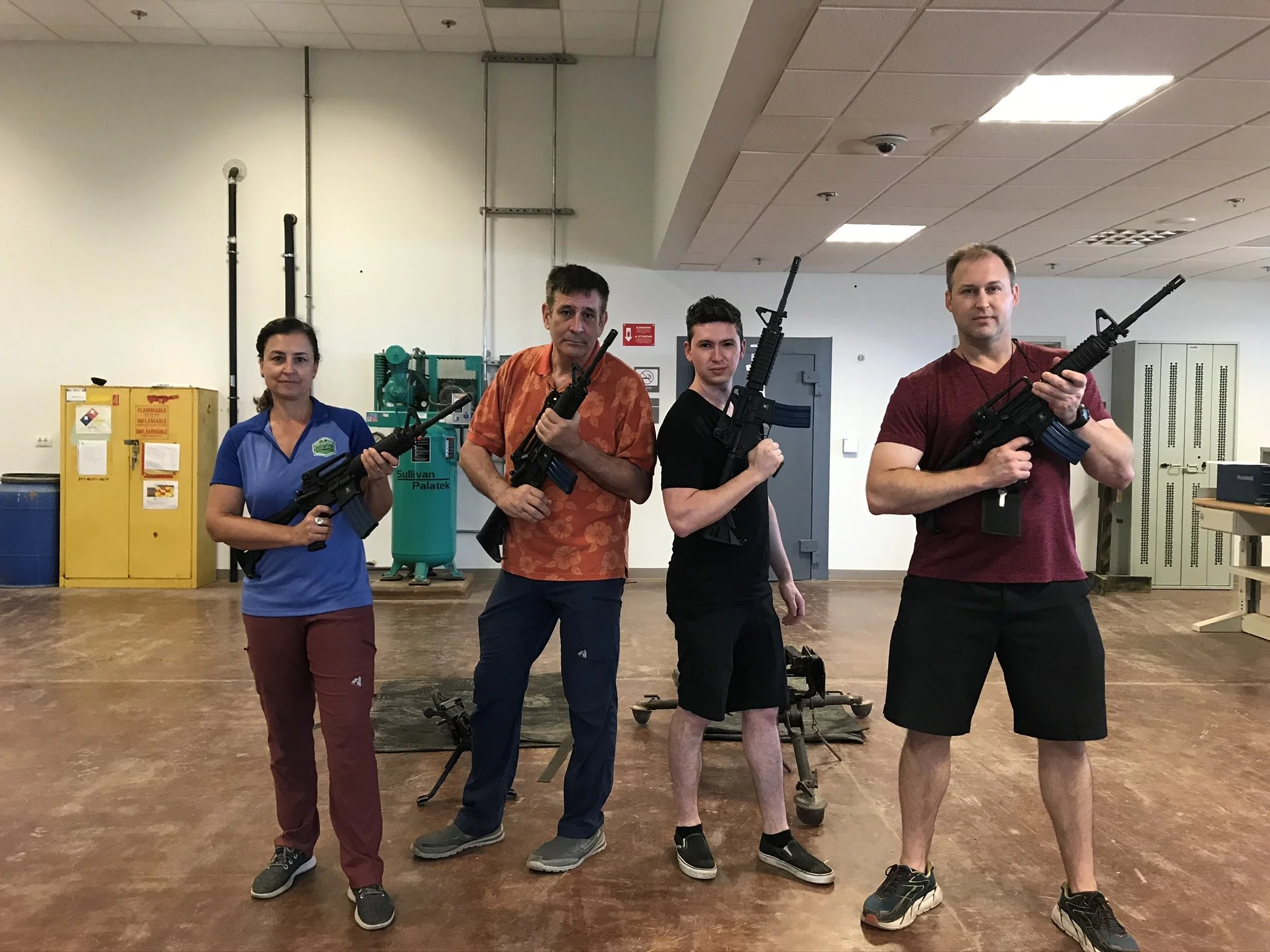
I have been assembling teams of entertainers and deploying them to military bases across the Middle East since 2015. In that time, I have led performers through desert heat, spotty infrastructure, wildly unpredictable venues, health emergencies, geopolitical crises, and the unique psychological pressure of living and working in close quarters far from home.
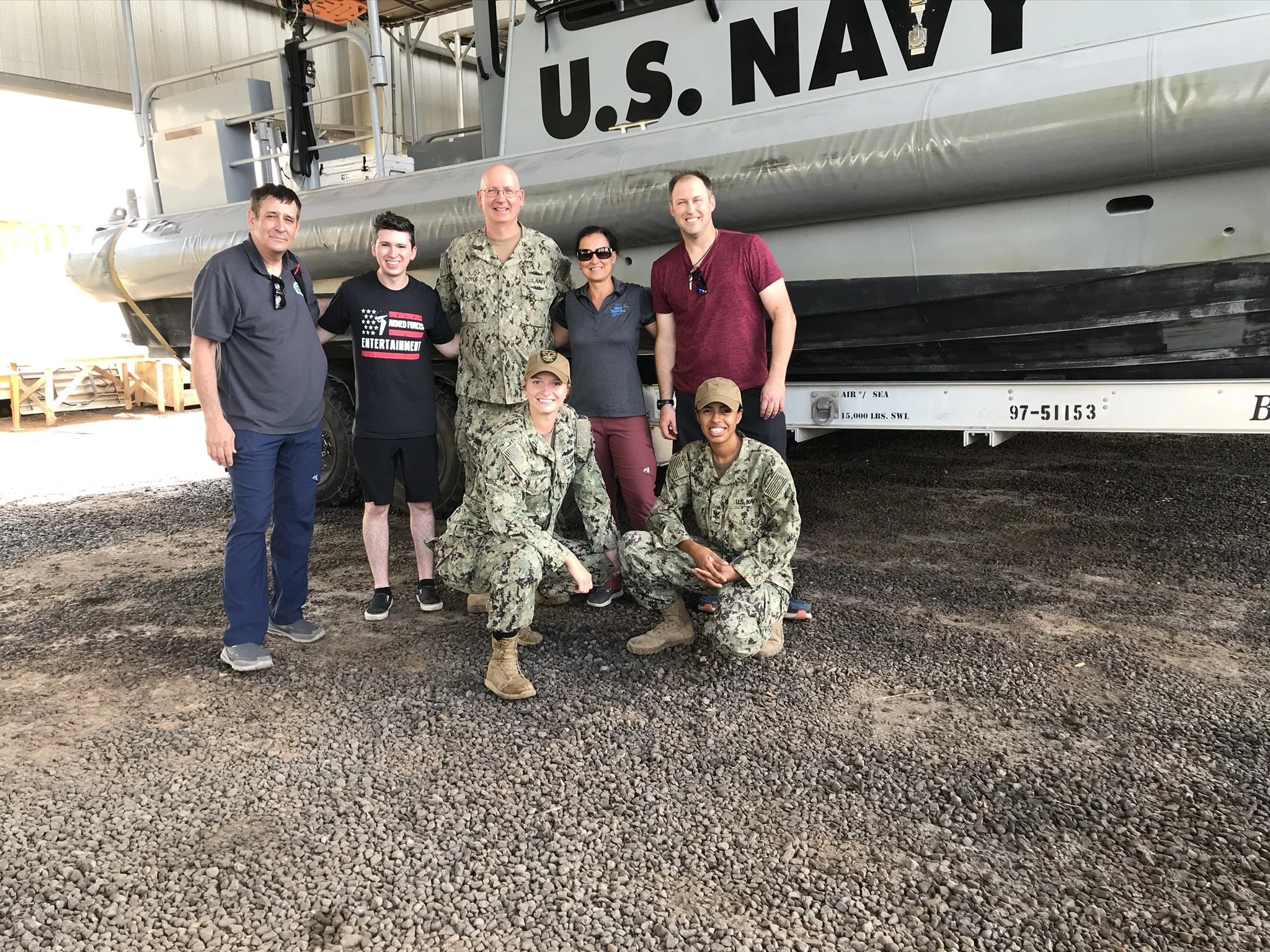
And I have learned something that applies just as clearly to a corporate team as it does to a group of magicians in Saudi Arabia: the resilience of a team is not determined in the moment of crisis. It is determined long before the crisis arrives.
In this article I want to share what a decade of high-stakes team leadership — in environments most corporate leaders will never encounter — has taught me about building teams that hold under pressure. I will draw on two distinct experiences: leading performers on overseas military tours, and building the marketing committee of the International Brotherhood of Magicians from scratch inside an institution that actively resisted change.
The settings could not be more different. The principles are identical.
01 First Principle
Select for Character Before Capability
When I am assembling a team for an overseas military tour, the first question I ask is never "how good is this performer?" Every person I consider is already excellent at what they do. The question I actually ask is: how will this person behave when things stop going their way?
I draw my team from three sources: people I have worked with before and whose character I know firsthand; professionals I have observed in demanding settings and whose composure under pressure stood out; and referrals from trusted colleagues who understand what these tours actually require. I am not looking for a résumé. I am looking for a person.
Because here is what most people do not understand about performing on a military base overseas: it is nothing like performing at home. At home, most entertainers work in venues that are built for them — proper stages, good lighting, attentive audiences, the whole apparatus of a professional event. On a military tour, you may be performing in a base movie theater one night and in the corner of a cafeteria the next. The audience is not there for you. You are there for them. And the conditions will test you in ways a domestic gig never will.
From the Briefing Room — What Performers Don't Expect
The venues vary wildly. A movie theater on Monday, a cafeteria corner on Wednesday. The performer who needs a perfect setup to feel confident will struggle. The performer who brings their own energy regardless of the room will thrive.
The content rules are strict. Nothing even slightly offensive. No hypnosis. No demonstrations that could be interpreted as mind control. The military has specific regulations and we follow them without exception — every performer needs to understand this before we arrive, not after.
Local customs matter. Each country we travel through has its own expectations around behavior, dress, and conduct. This is not optional knowledge. I brief the team on it before we leave, and I expect them to take it seriously.
You are not the star. The soldiers are the reason we are there. The moment a performer forgets this, the whole dynamic shifts — and not for the better.
A performer with a fragile ego will not survive this environment gracefully. I have had performers struggle with the fact that they were not being treated like celebrities — that the audience was not hanging on their every move, that the venue was not dressed for their arrival. In those moments, I would sit with them privately and gently remind them of the reason they had signed up for this tour in the first place.
Supporting the brave men and women stationed far from home is a higher calling than any headline gig. Some performers reconnected with that truth quickly. Others never fully did. And I learned from both.
The single most important selection criterion for any high-pressure team is this: does this person check their ego at the door? Talent without that quality is a liability. Talent with it is a force multiplier.
02 Second Principle
Brief for Reality, Not Best Case
One of the most common leadership mistakes I see is preparing a team for the experience you hope they will have rather than the one they are likely to have. When you brief for the best case, you leave people emotionally unprepared for anything else — and anything else is usually what happens.
My pre-tour briefings are explicit. I tell my team exactly what they are walking into: the range of venues, the content restrictions, the local customs, the realities of living on a military base overseas. I describe the conditions honestly — the desert heat, the limited facilities, the close quarters, the possibility that not every night will feel like a triumph.
I do this not to discourage them but to arm them. A performer who has already mentally prepared for performing in a cafeteria corner is not thrown when they walk into one. A performer who only prepared for the movie theater is. The surprise itself is the problem — not the cafeteria.
“Prepare your team for the experience they are likely to have. Surprise is the enemy of resilience.”
This principle extends well beyond entertainment. Any leader sending a team into a difficult environment — a challenging client, a volatile market, a demanding project — owes them an honest briefing. Not fear-mongering. Not false reassurance. An honest picture of what they are walking into, so that when the hard moments arrive they feel like something anticipated rather than something catastrophic.
03 Third Principle
Lead Through the Hard Moments, Not Around Them
I have escorted performers to hospitals — both on military bases and in Kuwait City. I have managed health crises in countries where English is not the primary language and where the nearest familiar medical facility was thousands of miles away. I have sat with people who were physically ill, emotionally overwhelmed, or simply not holding up the way they expected to.
In every one of those situations, the team was watching how I responded. Not just to the person in crisis — but to the disruption, the uncertainty, and the stress. A leader who handles the hard moment with steadiness signals to everyone around them: this is manageable. We are going to be okay. A leader who visibly unravels signals the opposite — and that signal spreads fast in a small, close-knit group living and working together in a foreign country.
The temptation, when something goes wrong, is to minimize it — to reassure the team that everything is fine before you actually know that it is. I have learned to resist that temptation. What people need in a difficult moment is not false reassurance. They need to see their leader engage with the problem directly, calmly, and with apparent confidence that a path forward exists. They do not need certainty. They need steadiness.
When a team watches their leader navigate a hard moment well, it raises their own ceiling for what they believe they can handle. Leadership is one of the most contagious things that exists inside a team — in both directions.
04 Fourth Principle
Mission Clarity Is the Antidote to Ego
The teams that hold together best on these tours share one thing above everything else: every person on the team is oriented toward the same mission. Not their own performance. Not their own comfort. Not their own reputation. The mission — which is to support these soldiers, to give them a few hours of laughter and escape, to remind them that people back home care about them deeply.
When mission clarity is present, ego becomes almost irrelevant. The performer who cares most about the mission does not need the best dressing room. They do not need the longest set time. They do not need the audience to know their name. They need to do their job well and they need the team to succeed. That orientation changes everything — the quality of the shows, the atmosphere backstage, and how the team holds together when conditions get difficult.
When I find a team of entertainers who complement each other well, who genuinely like each other as people, and who travel well together, I work hard to keep that team intact across multiple tours. The trust and rhythm that builds over repeated deployments is not something you can recreate from scratch each time. It is an asset — and I treat it like one.
“A team united around a mission larger than any individual is almost impossible to break.”
The Same Principles, A Different Battlefield
Everything I just described about building teams under pressure applies equally to the work I did inside the International Brotherhood of Magicians — a global organization that, when I joined its leadership, was in serious decline and actively resistant to change.
When I identified that the I.B.M. had no marketing committee, I did not inherit a team. I built one from scratch, inside an institution run by an old guard that had been consolidating power for decades and answering every new idea with the same seven words: "We tried that before. It didn't work."
I brought people in slowly and deliberately — people who believed in the organization's greater mission and who wanted to work together for the good of the I.B.M.'s membership, not for their own advancement. The selection process looked very different from assembling a touring team of magicians, but the underlying criterion was identical: does this person check their ego at the door?
The Old Guard Approach
Control every situation and decision
Hoard access to data and information as a source of power
Deflect new ideas with appeals to past failure
Protect the institution from change
Operate in opacity
The New Approach
Empower people to act on their own judgment
Demand transparency and shared access to information
Evaluate ideas on their own merits
Fight for the organization's future, not its past
Shield your team from the consequences of doing the right thing
That last point deserves more attention, because it is the one most leaders get wrong.
When I assembled my committee, I told them something that I meant completely: do the things you believe need to be done. If anyone questions why you are doing them — if there is pushback, if the old guard comes after you for stepping outside the established boundaries — come to me. I will absorb it. I will fight for you.
I wanted my people to feel genuinely empowered, and empowerment without protection is just a word. A team member who acts with initiative and then gets left exposed when the pushback comes will never act with initiative again. The leader who shields their team from that kind of institutional friction — who stands between their people and the forces trying to stop them — builds the kind of loyalty and trust that cannot be manufactured any other way.
The committee of ten people that emerged from that process did extraordinary work. Membership in the I.B.M., which had been in decline for years, has stabilized and begun to grow. The organization is moving toward transparency — toward a place where members and the broader magic community can see clearly that things are moving in the right direction. None of that happened because I found ten exceptional individuals. It happened because I found ten people who believed in something larger than themselves and were willing to fight for it together.
Empowerment without protection is just a word. If you want your team to act with courage, they need to know that someone is standing between them and the consequences of doing so. That is what leadership looks like from the inside of a team that is being asked to do hard things.
05 Fifth Principle
Protect the Team You Have Built
When I find a combination of people that works — who complement each other, who bring out the best in one another, who travel well together and hold steady when things get hard — I protect that combination fiercely. I do not rebuild from scratch out of convenience. I do not swap people out because a new face seems exciting. I invest in continuity, because continuity is where real team resilience lives.
The trust that builds between people who have been through difficult things together is qualitatively different from the rapport that builds in normal conditions. It is tested trust. It is the kind that holds when the situation changes fast and there is no time to discuss, only to act. And it cannot be shortcut.
Whether you are leading a touring entertainment company or a corporate division, the same truth applies: your most valuable asset is not your strategy, your budget, or your market position. It is the team you have built — the combination of people who know how to move together, who have checked their egos in favor of a shared mission, and who have already proven they can hold under pressure.
Protect that. Invest in it. And lead it in a way that makes them want to follow you into the next hard thing.
“Your most valuable asset is not your strategy or your budget. It is the team that has already proven it can hold.”
What This Means for Your Organization
You may never send your team to perform magic in a military cafeteria in the Middle East. You may never have to fight a decade-long political battle inside a century-old institution to earn access to a membership database. But the questions these experiences force you to answer are universal.
Do you select for character as carefully as you select for capability? Do you brief your team for reality or for the best case? Do you lead through hard moments with steadiness, or do you minimize and reassure? Have you given your team a mission large enough to subordinate their egos to? And when they take a risk on your behalf, do you stand between them and the consequences?
Resilient teams are not assembled. They are built — deliberately, over time, through the accumulation of shared experiences, honest preparation, and leadership that earns trust rather than simply demanding it. The crisis does not build them. The crisis only reveals what was already there.
Build accordingly.
Jason Michaels - Keynote Speaker · Magician · I.B.M. International President
Jason Michaels is a keynote speaker, sleight-of-hand magician, and author based in Nashville, Tennessee. He has led entertainment teams on overseas military tours since 2015 under Armed Forces Entertainment and serves as International President of the International Brotherhood of Magicians. His keynote programs on resilience and team performance draw on a decade of leading under real pressure — in some of the world's most demanding environments. To inquire about booking Jason, visit jasonmichaelsmagic.com.
Leadership Forged Under Pressure
Articles in this series:
Resilient Leadership: 5 Lessons from a Crisis in Saudi Arabia
Resilient Teams: What Leading Performers in Combat Zones Taught Me About Building Teams That Hold
Leading When the Stakes Are Real: What Performing for Soldiers Taught Me About Purpose