
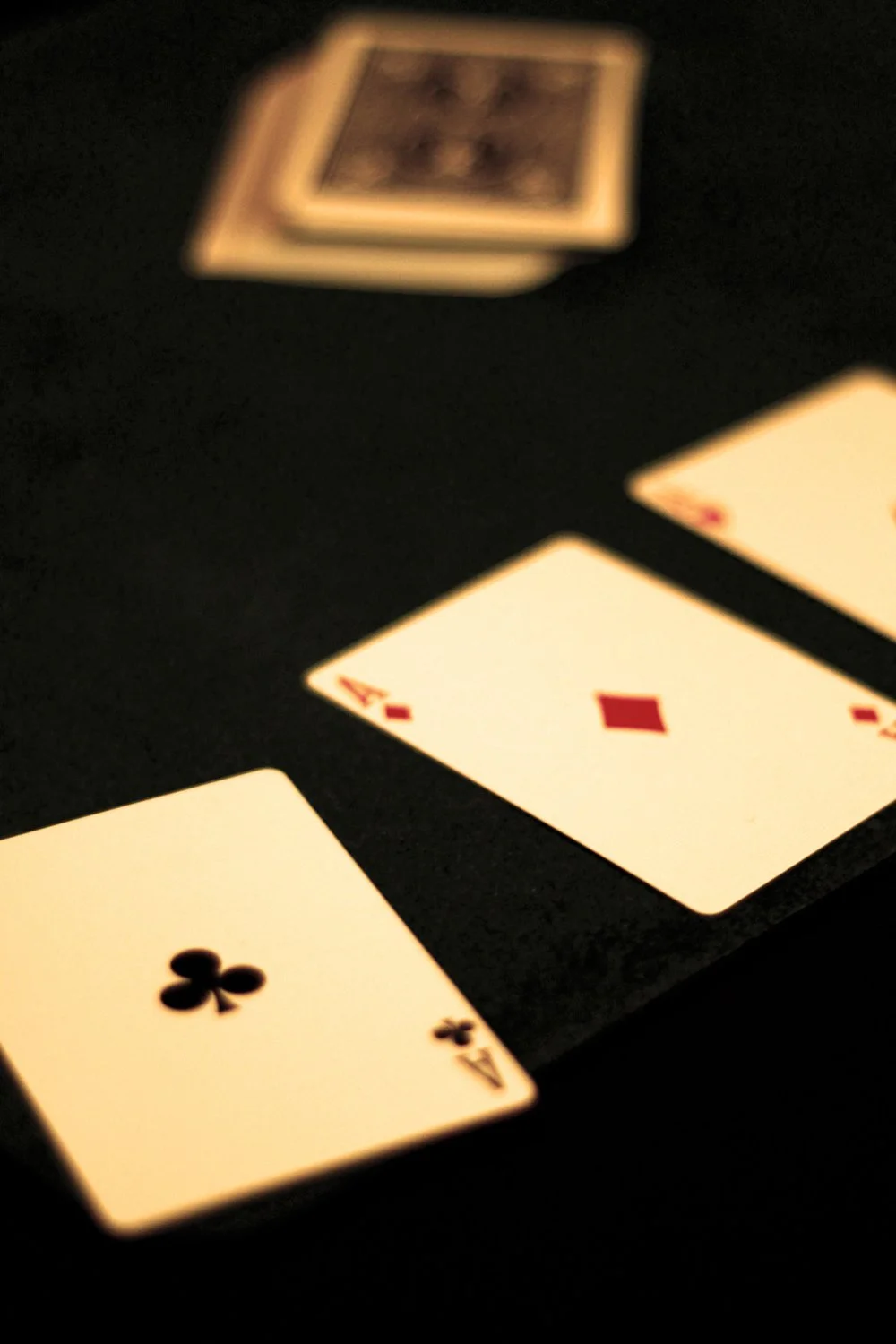
The Difference Between a Magician and a Sleight-of-Hand Artist
At some point, someone decided that anyone who could make a coin disappear should be called a magician.
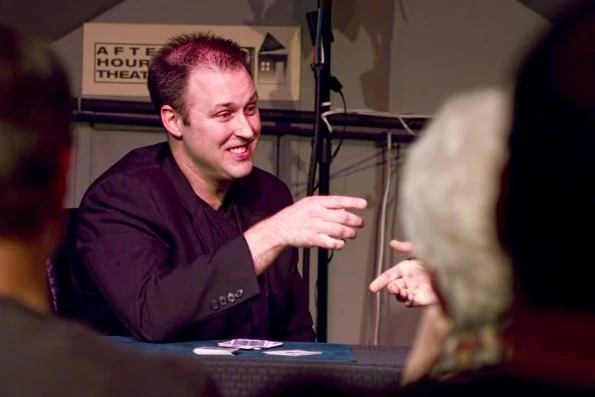
They weren't wrong, exactly. But they weren't being very precise, either.
The word "magician" covers an enormous amount of territory — everything from the guy doing balloon animals at a birthday party to the performer who spent twenty years developing the kind of sleight of hand that earns him a standing invitation to the world's most exclusive close-up magic fraternity. Same word. Very different things.
If you're planning a private event, a corporate function, or a luxury experience and you're trying to figure out what kind of entertainment fits — this distinction is worth understanding. Not because categories are everything, but because knowing what you're actually hiring changes what you can expect to happen in the room.
What Most People Mean When They Say "Magician"
When most people search for a magician, they're picturing something specific: a performer on a stage, working with big props, making things appear and disappear at a distance. The audience sits in rows. There's a curtain. Maybe a saw.
That's stage magic, and it's a legitimate art form with its own set of skills, its own history, and its own audience.
But it's almost certainly not what you want for an intimate dinner, a VIP hospitality suite, a C-suite retreat, or a private cocktail reception for forty people who've seen everything and are hard to impress.
For those settings, you want something different. You want someone who works with people, not for them.
What a Sleight-of-Hand Artist Actually Does
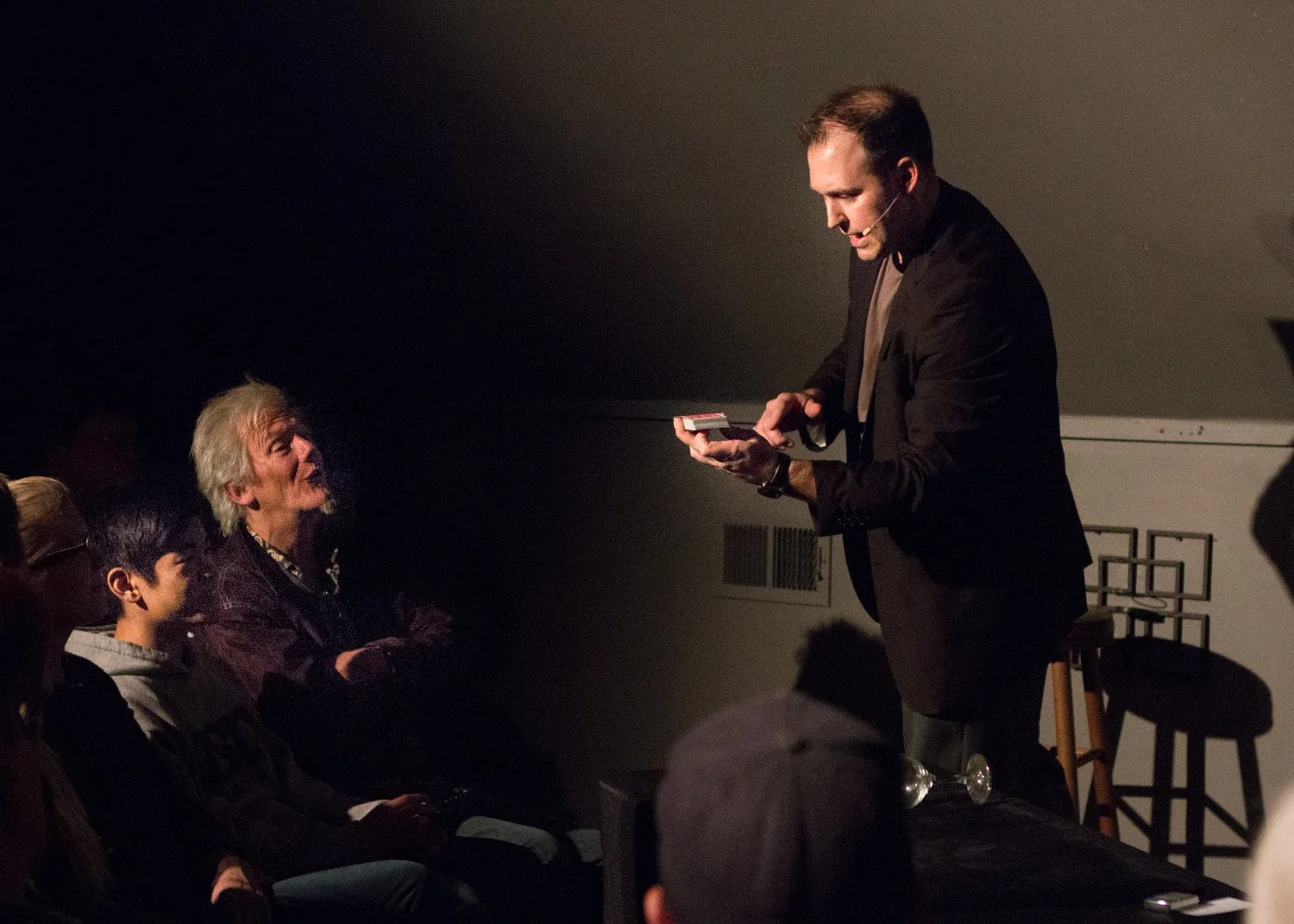
A sleight-of-hand artist works at close range — inches, not feet. Cards, coins, small objects. The audience isn't in seats; they're standing next to you, watching your hands.
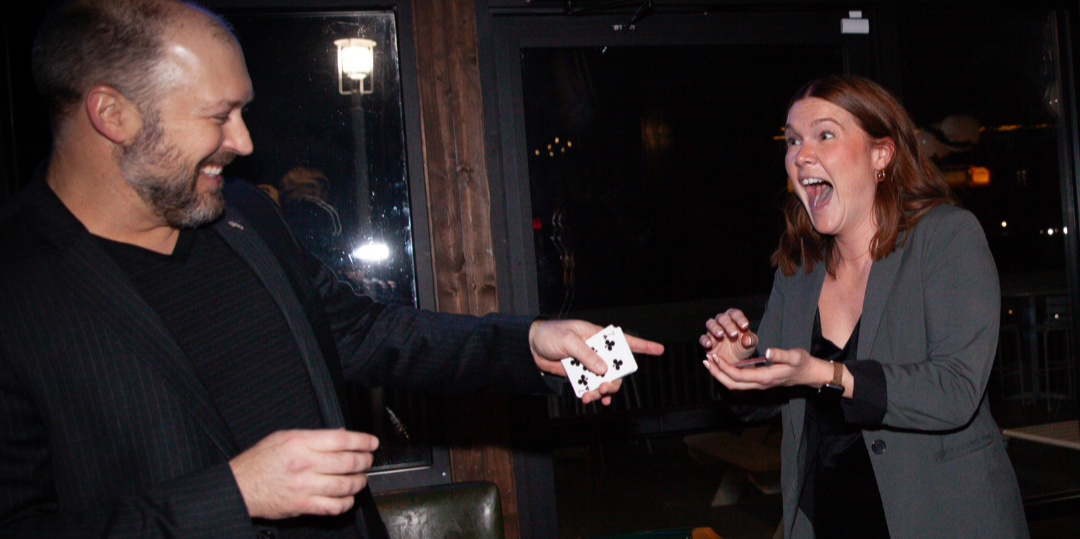
There's nowhere to hide.
No rigged stages. No forced perspectives. No hidden assistants. Just technique, timing, and years of deliberate practice executed in real time, in full view, while someone's face is eighteen inches from your hands.
This is a fundamentally different discipline than stage illusion. The mechanics are different, the training is different, and the experience it creates for the people watching is completely different.
A stage illusion produces wonder at a distance. Sleight of hand produces something closer to disbelief — that particular sensation of knowing you were watching, knowing you didn't blink, and still having no explanation for what just happened. That's the experience that stays with people. The one they talk about at dinner six months later.
“A demonstration of superb card manipulation.”
Why It Matters for Your Event
The format of magic you choose shapes the entire energy of the room.
Stage magic requires your guests to be an audience. They need to stop, sit, watch, and applaud on cue. For some events, that's exactly right. For most private events — especially high-end ones — it creates a formality that works against you. Guests are there to connect, not to be seated.
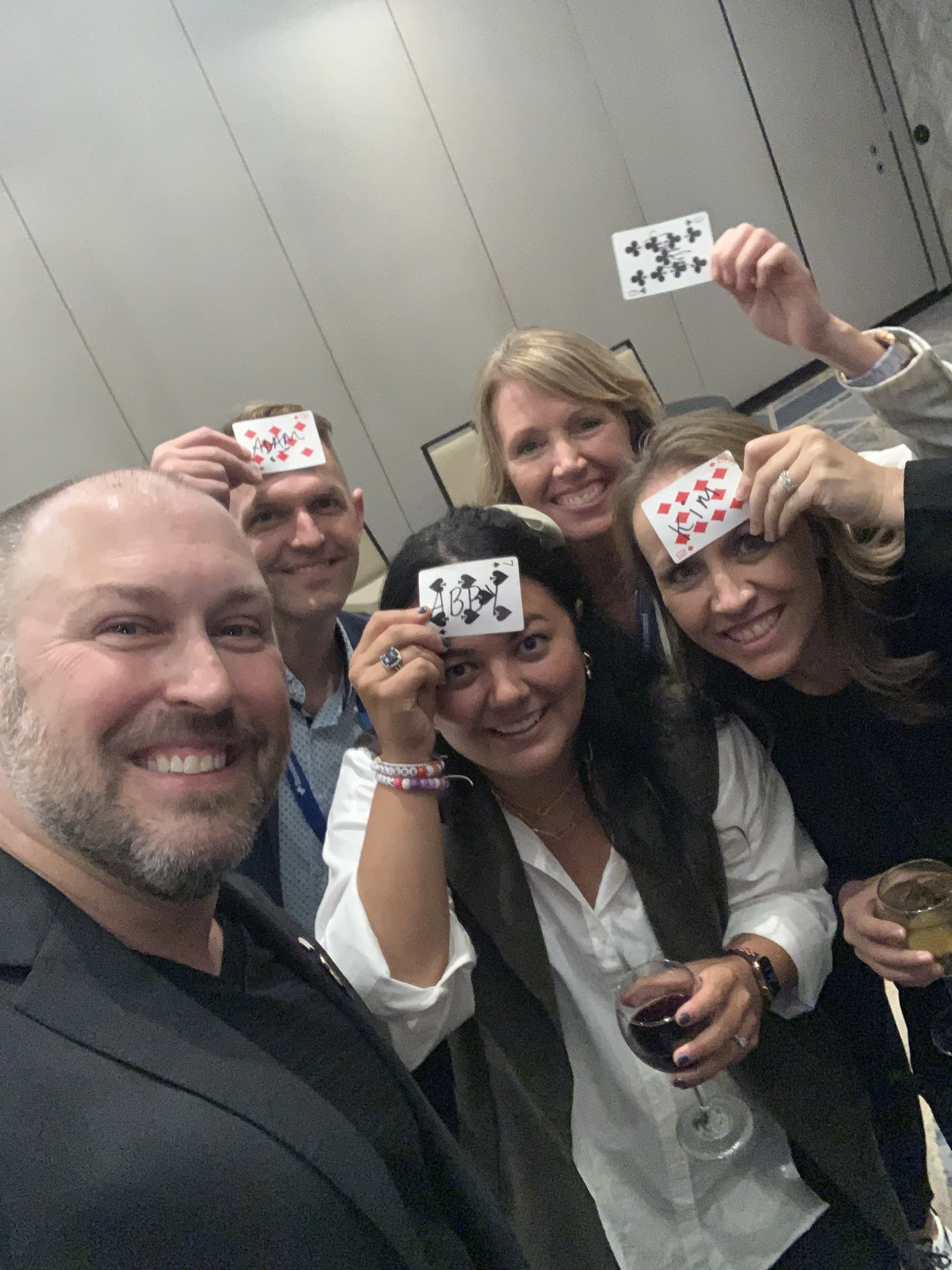
Close-up sleight-of-hand entertainment moves through the room. It happens where your guests already are — at the bar, at dinner, in conversation. It scales naturally to the moment. A group of three gets the same quality experience as a group of ten. Nobody has to stop what they're doing to be entertained. The entertainment finds them.
And because it happens at arm's length, the connection is personal in a way that a stage performance simply cannot be.
“His true talent is in storytelling — he would draw each guest in, then reveal a surprise turn or illusion. Every encounter left people laughing and in wonder, with others gathering around to have their own experience.”
The Training Gap Is Larger Than You'd Think
Here's what doesn't show up in a performer's marketing materials: the distance between someone who does magic as a hobby and someone who has dedicated their professional life to sleight of hand is not a small gap. It's a canyon.
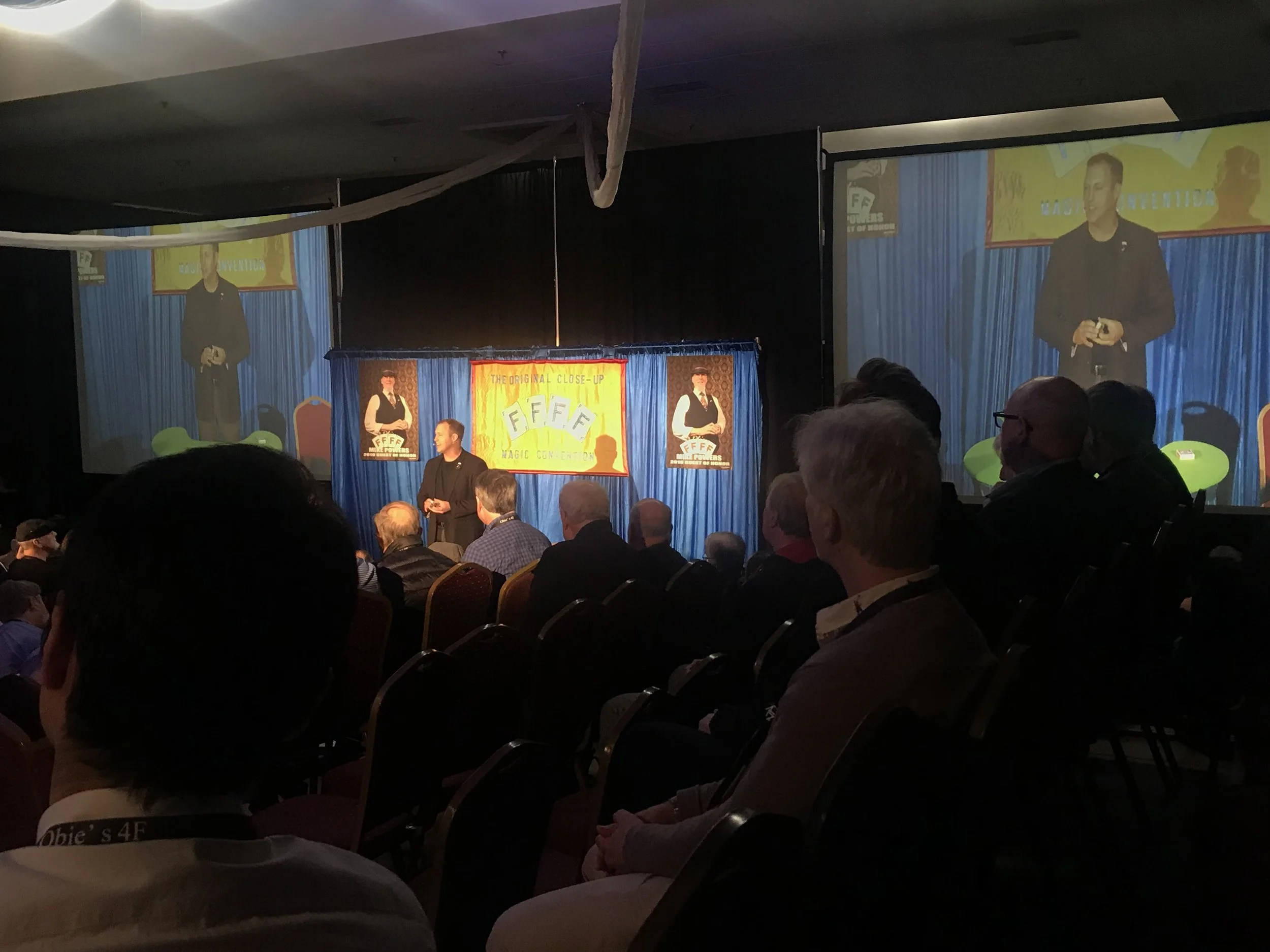
The close-up magic world has its own competitive circuit, its own credentialing bodies, its own fraternal organizations with invitation-only membership. Performers gather at conventions where they perform not for paying audiences, but for each other — which is an entirely different pressure. Your peers know every technique, every subtlety, every tell. When you perform in that room, there's nowhere to hide and nobody to fool. What survives that environment is real.
Getting into the 4F — the world's premier close-up magic conference, where membership is by referral only — isn't a matter of applying. It's a matter of being recognized by peers who have spent their own careers at the highest levels of the craft. The organization has existed for decades and has remained deliberately small. The people in that room are, without exaggeration, among the best close-up performers on the planet.
Performing for Penn & Teller on their television program Fool Us — where the explicit goal is to stump two of the most knowledgeable magic minds alive — is a benchmark almost no performer ever reaches. Penn & Teller have collectively seen tens of thousands of magic performances. They know how everything is done. Getting them to look at each other and genuinely not know what just happened is a different kind of achievement than impressing a general audience. It requires a level of technical originality that most performers never develop.

Consider what deliberate practice at this level actually looks like: not hours, but years, focused on a single type of move — a specific card control, a coin technique — until it produces no angle, no flash, no tell, under any conditions, at any speed. That kind of specificity is what separates a professional sleight-of-hand artist from someone who performs magic. The mechanics are invisible not because of misdirection, but because they've been refined past the point where a trained eye can catch them.
These aren't name drops. They're landmarks. They exist so that someone who doesn't live inside the magic world has a reference point for what "serious about this" actually looks like.
Most performers who call themselves magicians have never competed. Never performed at a convention. Never had their technique evaluated by peers at the highest level. That's not a criticism — it's just a description of the landscape.
When you're hiring entertainment for an event that matters, it's worth knowing where on that landscape the person you're considering actually sits.
The Question to Ask Before You Book
Before you hire anyone for a private or corporate event, ask this question:
What is this performer's primary discipline, and how long have they been at it?
Not "what can you do" — that question gets you a sales pitch. You want to know what they've spent their time actually developing. A generalist who does a little of everything is a different hire than someone who has spent two decades refining a single, specific skill to a professional level.
The answer tells you a great deal about what your guests are going to experience.
One More Thing Worth Knowing
The best close-up sleight-of-hand experiences aren't just technically impressive. They're personal.
The performer who is working inches from your guests, reading the room in real time, adjusting to the energy of each individual interaction — that performer has to be as much a social intelligence as a technical one. The mechanics get you in the door. What happens in the room is something else entirely.
That's the thing about working this close. You can't fake it. And when it's done well, your guests don't just remember a trick. They remember you threw a party where something impossible happened right in front of them.
That's a different kind of memory than a good caterer leaves behind.
“While serving on the committee for MPI Connect 2026, I was responsible for selecting speakers for our next meeting or conference... If you’re considering Jason Michaels, I can confidently say you will not be disappointed.”
If you're exploring close-up magic experiences for an upcoming event, [get in touch here] — and if you'd like to understand what makes a luxury entertainer worth the investment, the next piece in this series is a good place to start.