
RESILIENT LEADERSHIP SERIES · Article 3 of 5
Jason Michaels ◆ 2026 ◆ 10 min read ◆ Change · Leadership · Organizations
“The most dangerous thing inside a declining organization is not incompetence. It is fear — the institutional fear of repeating a past mistake so powerful that it paralyzes every attempt to build a better future.”
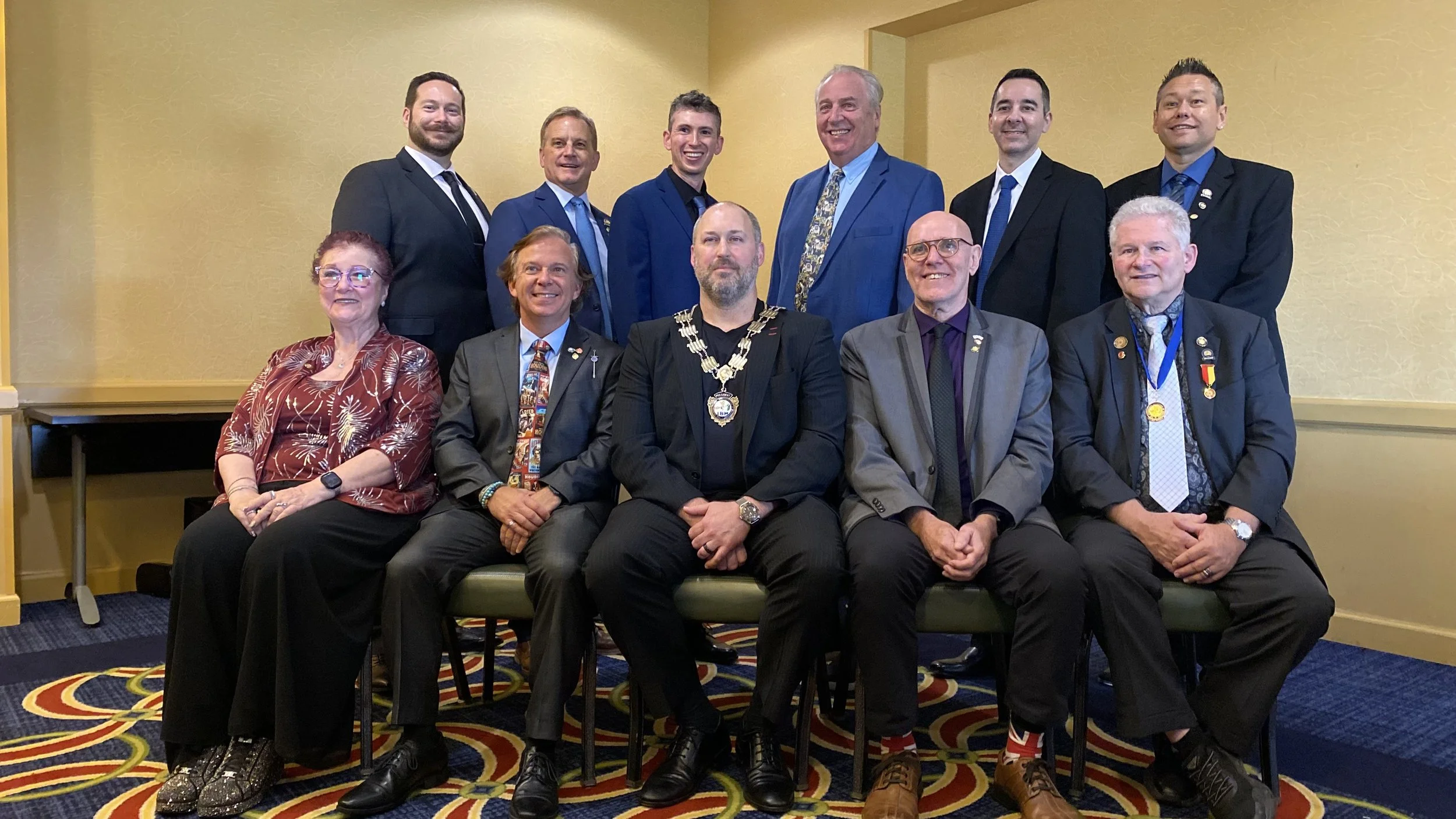
I joined the leadership of the International Brotherhood of Magicians — a global organization with members in more than 80 countries — because I believed in what it represented. The I.B.M. has been the heartbeat of the organized magic community for nearly a century. And when I arrived, it was slowly dying.
Membership was declining. The annual convention was struggling. And the people in charge — well-intentioned, many of them deeply committed to the organization — were making every major decision in the dark, based on hunches and guesses, with almost no real data to guide them.
I spent five years on the executive committee fighting to change that. I formed the marketing committee from scratch. I built coalitions. I called out an entire board of directors in open meetings. I fought battles that took six months and multiple votes to resolve. And I am now the International Brotherhood of Magicians' International President.
This is the story of what I learned about leading change inside an institution that was afraid of its own future — and what it means for any leader trying to move an organization that does not want to be moved.
The Real Problem Was Never the Data
When I first joined the I.B.M.'s executive committee, I had a straightforward goal: use social media advertising to grow membership and drive registrations to our annual convention. To do that effectively, I needed access to the membership database — basic information that would let me run targeted campaigns and measure what was actually working.
The request was denied. And the denial did not come from malice. It came from fear.
Years before I arrived, the I.B.M. had worked with an outside marketing company that had badly mishandled the membership database. The details of exactly what went wrong are less important than what happened next: the membership was angry, the board was embarrassed, and the organization's leadership responded the way frightened institutions always respond — by swinging the pendulum as hard as possible in the opposite direction.
They locked the database down completely. Access was restricted to a tiny group of people. No exceptions. No analysis. No outreach campaigns. The door was shut.
That decision was made to protect the members. I understand that. I even respect the impulse. But the effect, over time, was to make it impossible to learn anything meaningful about the organization's own membership — who they were, what they needed, why they were leaving, how to serve them better. Leadership decisions that should have been grounded in data were being made on intuition and tradition. The organization was flying blind and calling it caution.
When an institution responds to one bad experience by eliminating all risk, it does not become safer. It becomes unable to learn. And an organization that cannot learn cannot grow.
This is the pattern I see inside resistant organizations more often than any other: a past wound becomes a present policy becomes a future catastrophe. The original harm was real. The protective response made sense at the time. But nobody ever revisited it, nobody updated it as circumstances changed, and over years it calcified from a precaution into a dogma.
I was not fighting bad people. I was fighting a bad idea that had been held so long it had started to feel like a principle.
How Institutional Fear Actually Works
Before I describe how I fought this battle, I want to spend a moment on something most change leadership articles skip entirely: the honest anatomy of institutional resistance.
When I first raised the database issue, I encountered something I did not initially expect. There was interest. People on the board understood the argument. Several of them privately agreed with me. But almost everyone was operating from the same underlying position: what if something goes wrong again?
Nobody wanted to be the person who had unlocked the database and caused another member relations disaster. Nobody wanted to stake their reputation on a new approach inside an organization with long institutional memory for past failures. The risk of being wrong in a visible way felt far greater than the slow, invisible cost of continuing to make decisions without real information.
That is how institutional fear works. It does not announce itself as fear. It announces itself as caution, as prudence, as respect for the lessons of history. It says: we tried that before and it didn't work. It says: our members are not ready for this. It says: now is not the right time.
DIAGNOSING INSTITUTIONAL FEAR — WHAT IT SOUNDS LIKE vs. WHAT IT MEANS
What they say
What it means
"We tried that before and it didn't work."
We are afraid to try again and be blamed if it fails.
"Our members aren't ready for this."
We aren't ready for the reaction if they push back.
"Now isn't the right time."
There will never be a right time as long as I can defer.
"We need to be careful."
I need cover if this doesn't work out.
"Let's study this further."
I am hoping this goes away before I have to decide.
None of the people saying these things were necessarily bad leaders or bad actors. Many of them were people who genuinely cared about the organization. But they were leading from a position of self-protection — and self-protection, when it becomes the dominant organizational instinct, is indistinguishable from paralysis.
The leader who wants to drive change has to understand this clearly: you are not fighting opposition. You are fighting fear. And you cannot defeat fear with data alone, however good your data is. You have to give people something stronger than fear to hold onto.
How I Actually Won
The battle for access to the IBM's membership database took approximately six months and several board meetings to resolve. Here is what that process actually looked like — because the tactical reality of leading change is rarely as clean as the retrospective version.
The Initial Ask
I raised the issue directly: the organization needs to use social media advertising to grow. To do that, I need access to the membership database. The request was met with interest — and with fear. Nobody said no outright. Nobody said yes.
The Direct Confrontation
I stopped being diplomatic about it. In board meetings, over email, on phone calls, I told the board directly: we are operating like an organization from the 1980s, and that model does not work anymore. I named the fear. I called it what it was. I told them it was time to be brave.
Building the Coalition
I was not alone. There were others on the board who believed as I did — who had tried and failed to move this issue before I arrived. I found them. I aligned with them. When I laid out my argument in meetings, they stood up and supported it. A lone voice can be dismissed. A coalition of voices is harder to ignore.
The Unexpected Ally
One member of the board — thoughtful, smart, someone who had been hesitant — watched me refuse to back down through meeting after meeting. He saw that I was going to keep pushing regardless of the resistance. He made a decision: he would rather work with me to shape what came next than continue opposing something that was going to happen anyway. His support was pivotal.
The Vote
The board voted to grant me access to the database for analysis and use on social media platforms. A narrow, defined mandate — but a mandate. The door was open.
“I did not win by making the other side comfortable. I won by making it clear that I was not going to stop.”
This is a truth about organizational change that polished leadership frameworks tend to omit: sometimes the most important quality a change leader possesses is sheer, sustained will. Not aggression. Not manipulation. Simply the refusal to be worn down, deferred, or bureaucratically buried. The people resisting change are often counting on you to eventually run out of energy. Do not give them that.
01 First Lesson
Name the Fear Directly
The single most effective thing I did in that entire campaign was to stop treating the resistance as a disagreement about strategy and start naming it as what it was: fear.
I told the board, plainly, that they were operating from a place of fear. That they were so worried about repeating a past mistake that they had made it impossible to build a future. That the cost of their caution was not zero — it was the slow erosion of an organization that thousands of people around the world cared about deeply.
Naming fear does something important. It removes the respectability of the disguise. When resistance is dressed as caution or prudence, it is very hard to argue against — who wants to be reckless? When it is named as fear, it has to defend itself on different terms. And fear, when it has to defend itself honestly, rarely survives the scrutiny.
Do not argue against the stated position. Diagnose the real one. The stated position is "this is too risky." The real position is "I am afraid of being blamed." Those require completely different responses.
02 Second Lesson
Inspire and Confront — In the Same Breath
I want to be clear about something: I did not simply attack the board's position. I also tried to give them something better to move toward.
Pointing out what is wrong with the current state is necessary. It is not sufficient. People who are operating from fear need more than a diagnosis of the problem — they need a vision of what becomes possible if they are brave enough to act differently. I told the board what the I.B.M. could become, what it could regain: an organization that understood its own membership deeply, that could measure its own success and failure, that could make decisions grounded in real information, that could grow rather than decline.
The confrontation opened the door. The inspiration gave people a reason to walk through it. Both were required.
03 Third Lesson
Build Coalitions Before You Need Them
I did not win the database vote alone. I won it with the support of people who had been trying to make the same case before I arrived — who had the right instincts but had not yet found a way to break through the resistance. When I came in and pushed hard and publicly, they had someone to stand behind. And when they stood up alongside me, I had something a single voice cannot have: the appearance of consensus rather than individual agenda.
Find the people inside the institution who already believe what you believe. They exist in almost every organization. They are often quiet — they have been dismissed or worn down or simply not found the right moment. Give them a moment. Give them cover. Make it easier for them to say yes than to stay silent.
The unexpected ally — the thoughtful board member who had been hesitant and eventually decided to work with me rather than against me — was not someone I recruited. He was someone I converted. And he converted not because I persuaded him intellectually, but because he watched me refuse to quit and made a pragmatic decision: this is going to happen, and I would rather help shape it than watch it happen without me.
That is a form of coalition-building too. You do not need to win everyone's hearts. Sometimes you only need to make it clear that the train is leaving the station, and give people the opportunity to get on board.
What the Landslide Looked Like
When the board voted to give me database access, something shifted in the organization that went well beyond the specific issue I had been fighting for.
Other board members — people who had been watching the battle unfold — began bringing forward their own ideas that they had previously held back. The vote had demonstrated something that the whole organization could see: the door to change was open. The person pushing for modernization had won. The old assumption that new ideas would be reliably blocked was no longer reliable.
The new board members coming in are different from those who came before. They are enthusiastic about operating like a modern organization. They want to analyze the data. They want to understand who the IBM's membership actually is, what those members need, and how the organization can better serve them. The culture of making decisions in the dark is giving way to a culture of informed, transparent leadership.
Membership, which had been in decline, has stabilized and begun to grow.
None of this happened because I was the smartest person in the room. It happened because I was willing to fight longer and harder than the resistance expected — and because I fought for something real, not just something I personally wanted.
What Changed After the Database Battle Was Won
The culture of "no" became a culture of "let's try." Board members who had previously been reluctant to support new initiatives began bringing their own ideas forward. The precedent had been set that change was possible.
New leadership came in already oriented toward modernization. The next generation of I.B.M. board members arrived expecting transparency and data-driven decision-making — not as a radical idea, but as the baseline.
Membership decline reversed. With the ability to actually analyze who the membership was and what they needed, the organization could make real decisions about how to serve and attract members — rather than guessing.
The organization became transparent. Members and the broader magic community can now see clearly that the I.B.M. is moving in the right direction. That visibility itself builds trust and enthusiasm.
The Thing I Know Now That I Wish I Had Known Then
I have spoken, since winning that battle and ascending to the presidency, with several people who did not agree with me in the early stages of this fight. What they have told me is striking.
They are excited. They are optimistic. They tell me they are glad things went the way they did.
What I know now, that I could only sense then, is this: people want a strong leader who they can believe in. Not an autocrat. Not someone who steamrolls every concern. But a leader who is clear about where they are going, why it matters, and who will not be deterred by the friction that always accompanies real change.
The people who resisted me were not people who wanted the I.B.M. to fail. They were people who were frightened, who needed someone to show them that the risk of moving forward was smaller than the risk of standing still. When I became that person — when I demonstrated through sustained action that I was going to fight for this organization's future regardless of the personal cost — many of them came around.
And the second thing I know now: people want to feel protected by their leader. They want to know that if they take a risk on behalf of the mission — if they stand up and support a new idea or push back against the old guard or step outside the established boundaries — they will not be abandoned if it goes sideways. That protection, that willingness to absorb the consequences on behalf of your people, is not a soft leadership quality. It is one of the hardest and most important things a leader can do.
“People do not follow leaders who are right. They follow leaders who are brave — and who make it safe for others to be brave alongside them.”
What This Means for Your Organization
You may not be leading a global fraternity of magicians. But if you are leading anything — a company, a division, a team, a department — you have almost certainly encountered the pattern I am describing: an institution that is declining or stagnating, whose resistance to change is dressed as wisdom, and where the real obstacle is not the stated objection but the fear underneath it.
The prescription is not comfortable. It requires you to name things directly that most organizational cultures prefer to leave unnamed. It requires you to confront people who have more institutional history and positional authority than you do. It requires you to build alliances, absorb pushback, refuse to be deferred, and keep making your case in board rooms and on phone calls and in emails long after the comfortable version of leadership would have moved on to easier problems.
It also requires you to inspire — to give the people around you a vision of what becomes possible on the other side of the fear. Data is not enough. Arguments are not enough. People need to feel, in their bones, that the future you are describing is worth the discomfort of getting there.
Do all of that, and sustain it, and protect the people who take risks alongside you. The organizations that need changing rarely change easily. But they do change — when someone refuses, with enough clarity and enough courage and enough sustained will, to let them stay the same.
Jason Michaels
Keynote Speaker · Magician · I.B.M. International President
Jason Michaels is a keynote speaker, sleight-of-hand magician, and author based in Nashville, Tennessee. He serves as International President of the International Brotherhood of Magicians and has led organizational transformation from the inside of one of the magic world's most storied institutions. His keynote programs on resilience, leadership, and change help organizations in healthcare, finance, corporate, and military sectors build the cultures they need to thrive. To inquire about booking Jason, visit jasonmichaelsmagic.com.
Leadership Forged Under Pressure
Articles in this series
Resilient Leadership: 5 Lessons from a Crisis in Saudi Arabia
Resilient Teams: What Leading Performers in Combat Zones Taught Me
Leading Change Against Resistance: How I Dragged a Century-Old Institution Into the Modern Era
Leading When the Stakes Are Real: What Performing for Soldiers Taught Me About Purpose