
This is Part 2 of a 5-part series on luxury close-up entertainment
Article #1 - The Difference Between a Magician and a Sleight-of-Hand Artist
Article #2 - What Penn & Teller: Fool Us Really Tells You About a Performer
Articles #3 - #5 - COMING SOON
What Penn & Teller: Fool Us Really Tells You About a Performer
Here's a problem unique to the entertainment industry: almost no one is licensed.
A surgeon has a medical license. An attorney passes the bar. An accountant earns a CPA. These credentials don't guarantee excellence, but they establish a floor — a minimum standard that has been verified by an external authority.
When you hire a close-up magician for a private event, there is no equivalent. Anyone can build a website, buy a few props, and call themselves a professional. The word "professional" in this context means precisely nothing. It's self-reported, unverified, and entirely unchecked.
So how do you actually evaluate a sleight-of-hand performer before you book one?
You look for the credentials that exist inside the close-up magic world itself — the ones that can't be self-awarded, can't be purchased, and aren't given to anyone who simply shows up.
Here's what those look like, and what they actually mean.
Penn & Teller: Fool Us — What It Is, and What It Isn't
If you've spent any time around the entertainment world, you've probably heard of Penn & Teller: Fool Us, the long-running television program where magicians perform for Penn & Teller with the explicit goal of stumping them.
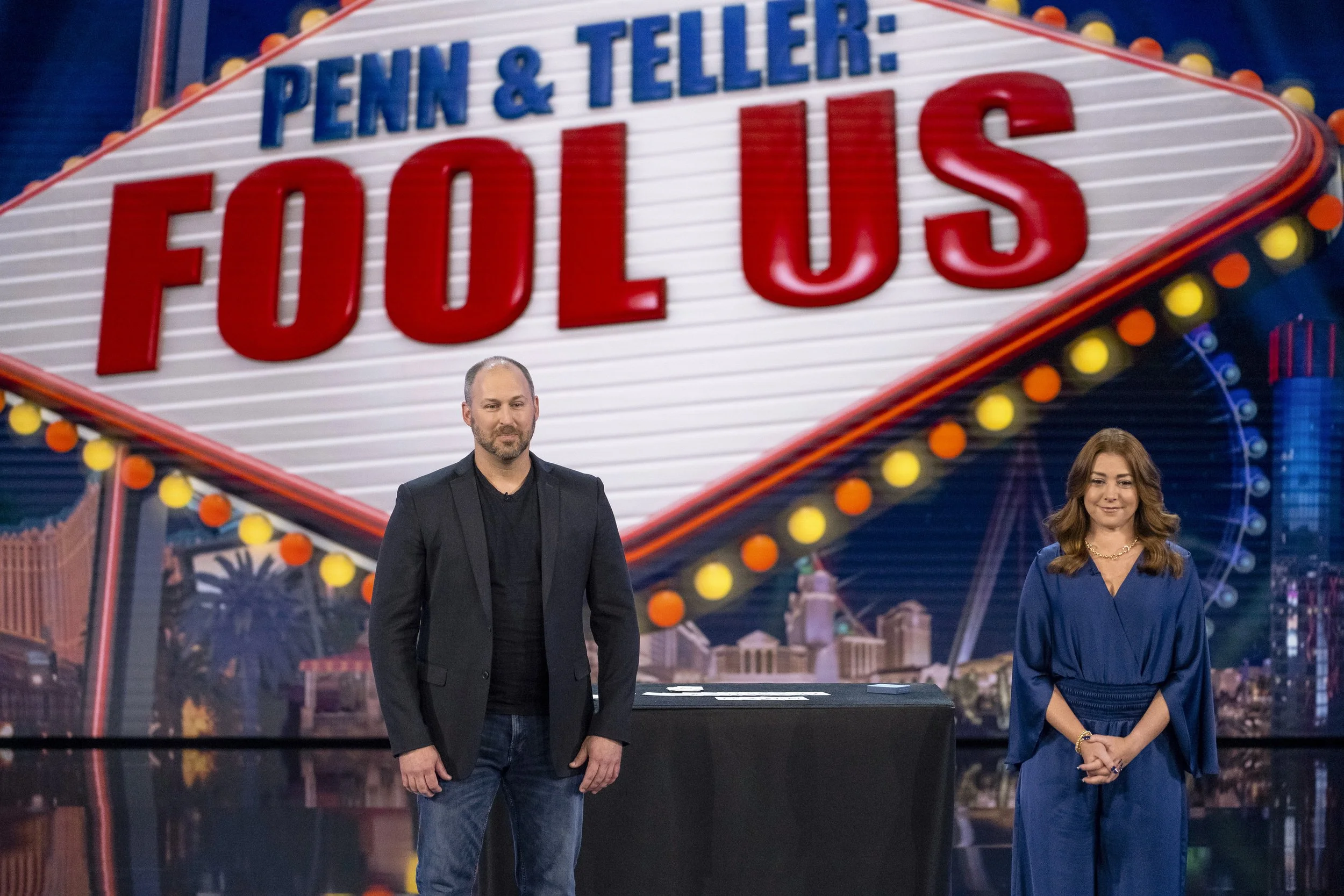
Jason Michaels appearing on Penn & Teller: Fool Us.
Most people understand it as a television show. What they don't fully appreciate is the nature of the challenge.
Penn & Teller are not celebrity judges offering vague feedback. They are two of the most technically knowledgeable people in the history of magic. Penn Jillette has been studying, analyzing, and deconstructing magic for more than fifty years. Teller spent decades developing some of the most technically demanding close-up work and stage magic in the world. Together, they have seen and performed tens of thousands of performances. They know how virtually everything is done — not at the level of a curious audience member, but at the level of a master craftsman who has spent a lifetime inside the machinery.
When Penn & Teller watch a performance on Fool Us, they are not watching to be entertained. They are watching with complete technical attention, looking for the method. And in most cases, they find it.
Getting them to look at each other and genuinely not know what just happened — that is not a television moment. It is a technical achievement. It means a performer has developed something original enough, and executed it precisely enough, that two of the most experienced eyes in the world couldn't catch it in real time.
That is a very narrow group of people.
The 4F — What It Is, Why It Matters, and Why You've Never Heard of It
The Fechter's Finger Flicking Frolic — known simply as the 4F in close-up magic circles — is the world's premier gathering of close-up magic specialists.
If you've never heard of it, that's somewhat by design.
The 4F has existed for decades and has remained deliberately small. Attendance is not a matter of purchasing a ticket or registering for a conference. Membership is by invitation and referral only, extended by existing members who have themselves reached the highest levels of the close-up craft. There is no application. There is no audition you can request. You are recognized, or you aren't.
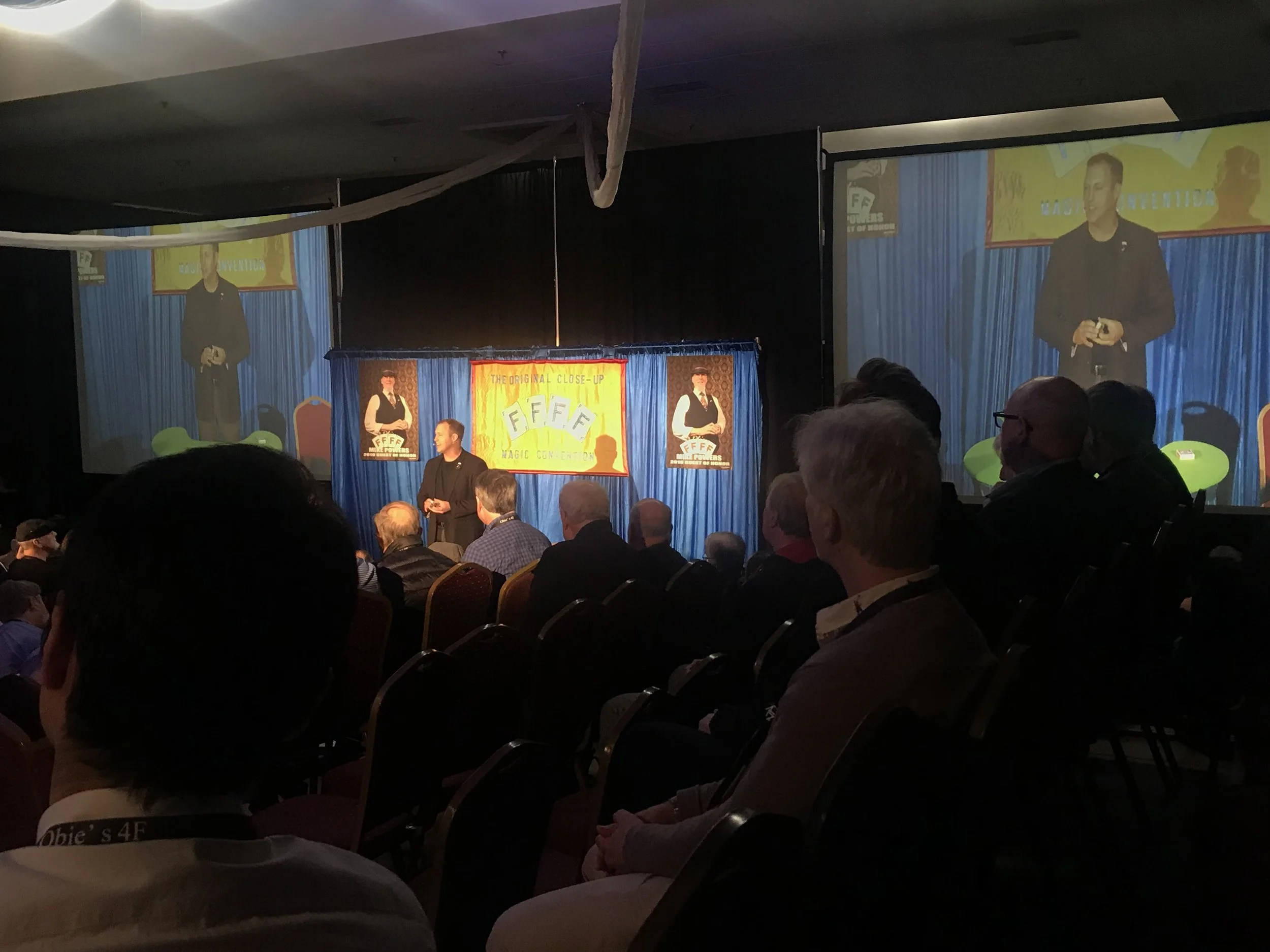
Jason Michaels performing at 4F.
The people in that room are not enthusiasts. They are professionals who have spent decades refining a single discipline. Getting a referral to the 4F means being recognized, by that peer group, as someone who belongs in that room.
Think of it this way: there's a difference between attending an open industry conference and being admitted to a private gathering of the ten most accomplished practitioners in your field — people who don't extend the invitation out of politeness, but because they've decided you're operating at their level.
That's the 4F.
When you see it in a performer's biography, it is not filler or self-promotion. It is a specific, verifiable signal that the performer has been recognized by the most demanding peers in the world of close-up magic.
What Sleight-of-Hand Competitions Actually Require
Beyond the 4F and the Fool Us benchmark, the close-up magic world has its own competitive circuit — conventions and competitions where performers present their work not to general audiences, but to each other.
This is a harder room than any private event you could book them for.
When a sleight-of-hand artist performs for a general audience, the audience doesn't know what to look for. They're watching for the overall experience — is it surprising? Is it fun? Is it convincing? A general audience can be fooled by technique that a knowledgeable peer would spot in an instant.
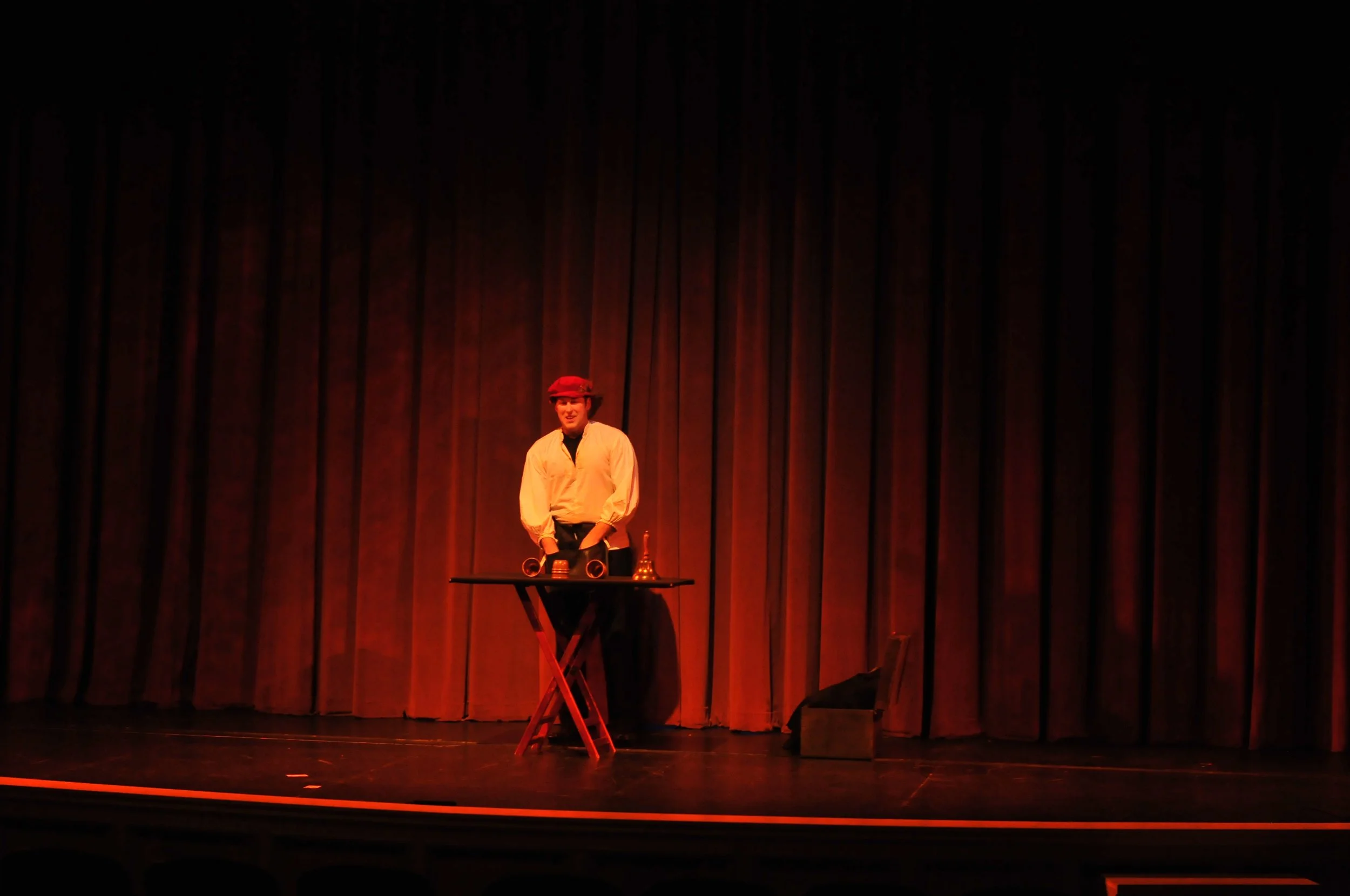
When a performer competes before a panel of expert judges at a close-up magic convention, that margin disappears entirely. The judges know every technique. They know the angles, the misdirection patterns, the mechanical principles behind every move. What survives that level of scrutiny is the real thing — genuine technical mastery, executed cleanly enough that a knowledgeable eye can't catch it.
Competing at this level and placing is a meaningful credential. It means the work has been evaluated by the hardest possible audience and held up under examination.
Most performers who call themselves professionals have never competed. Never been in that room. Never had their technique evaluated by someone who could actually tell the difference.
That's worth knowing.
Why This Matters When You're Comparing Performers
If you're currently evaluating a few entertainers for an upcoming event, this is the framework that separates meaningful credentials from marketing language.
Ask yourself: can this performer demonstrate any external validation of their work? Not client testimonials — anyone can curate those. Not years of experience — anyone can count years. Not the size of a social following — almost entirely irrelevant to technical skill.
The meaningful questions are specific:
Have they performed for Penn & Teller on Fool Us? Are they a member of the 4F? Have they competed at the convention level and placed? Have they been recognized by publications or organizations that cover the craft itself, not just the entertainment industry broadly?
These are not arbitrary hoops. They are the closest thing the close-up magic world has to external credentialing — moments where a performer's work has been evaluated by people who know precisely what they're looking at.
A performer who has navigated all of those isn't just talented. They have had their talent verified by the hardest possible audiences.
That's a meaningfully different kind of hire.
One More Thing…
Credentials explain what a performer is capable of. They don't tell you how they read a room, how they handle the unexpected, or what the experience actually feels like for your guests.
But they narrow the field considerably.
When the New York Times describes a performance as "a demonstration of superb card manipulation," when two of the most knowledgeable magic minds in the world are genuinely stumped, when the world's most selective close-up magic community extends an invitation — those aren't incidental details. They're data points from people who knew exactly what they were looking at.
Each one, in its own way, is saying the same thing: yes.
That's a reasonable place to start.
Next Steps
If you're evaluating entertainment for a private or corporate event, [reach out here] to discuss availability — and if you haven't read the previous piece on [what actually separates a sleight-of-hand artist from a magician], that's a useful starting point.