
This is Part 3 of a 5-part series on luxury close-up entertainment
Article #1 - The Difference Between a Magician and a Sleight-of-Hand Artist
Article #2 - What Penn & Teller: Fool Us Really Tells You About a Performer
Articles #3 - What 20 Years at the Card Table Actually Looks Like
Article #4 & #5 - COMING SOON
What 20 Years at the Card Table Actually Looks Like
Most people who hire entertainment for a private event don't spend much time thinking about what's behind it.
They see the finished product — the effect, the reaction, the moment of genuine disbelief on someone's face — and they evaluate it on that basis. Which makes sense. That's what they're paying for.
But there's a version of this conversation that almost never happens, and it's the one where someone asks: what did it actually take to build that?
Not out of obligation to understand it. Just because the answer is more interesting — and more relevant to what you're buying — than most people realize.
The Part That Doesn't Make It Into the Bio
A professional biography is a highlight reel. It tells you where someone has performed, who has recognized their work, and what they've been called. What it doesn't tell you is what happened in between — the years of work that made the highlights possible.
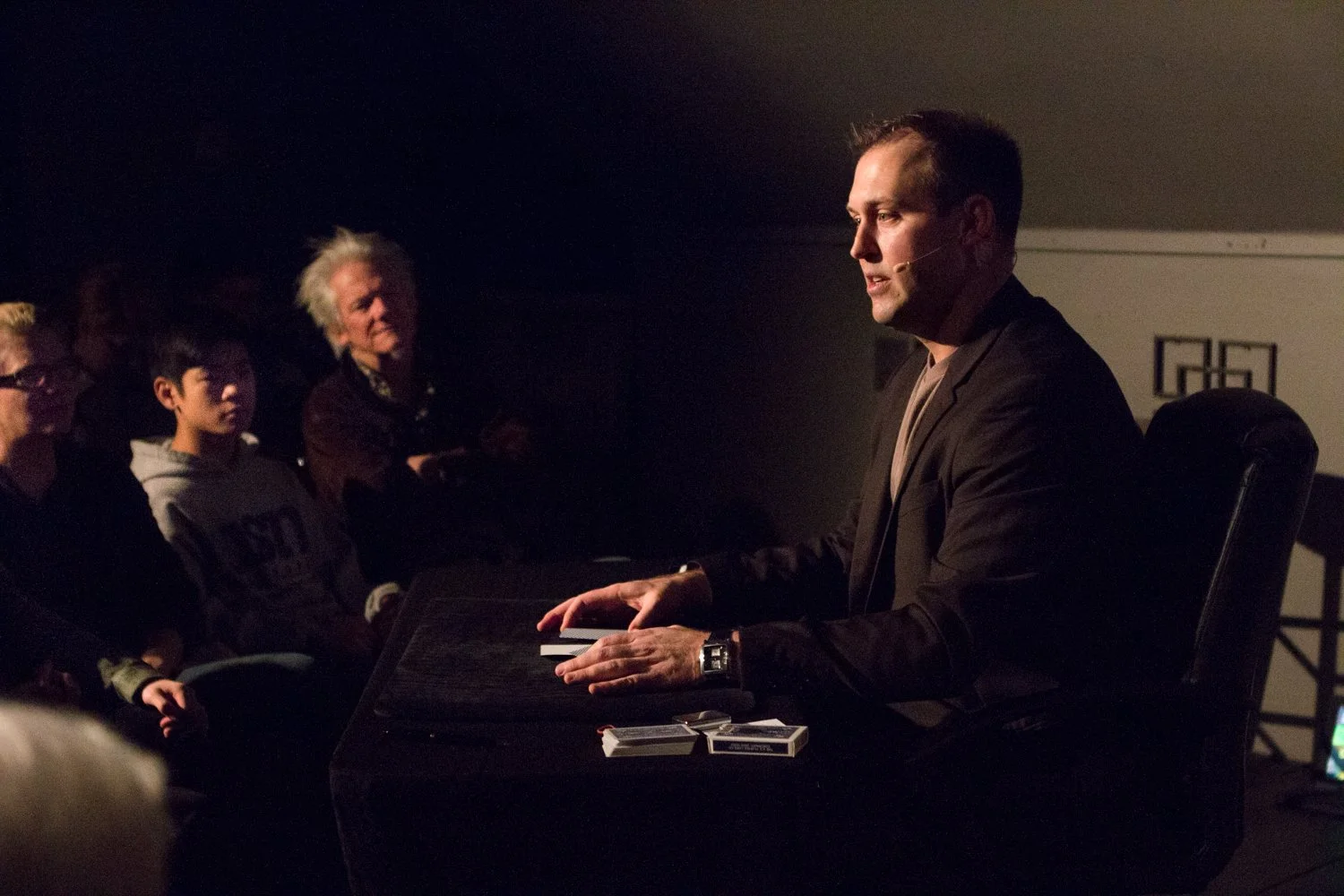
Here's what that actually looks like at the level of serious close-up sleight of hand.
You isolate a single movement — a card control, a coin switch, a specific grip — and you work it for weeks. Not hours. Weeks. You work it slowly, then at speed. You work it in front of a mirror, then without one. You work it in bad light, in distracting environments, while holding a conversation, because those are the conditions you'll face when it counts.
Then you show it to someone who knows exactly what to look for, and you find out whether it holds up.
Usually, at first, it doesn't. The angle is wrong at four feet. The timing is half a beat off. Something in the grip telegraphs the move before it happens. You go back. You work it again. You adjust by fractions — not inches, fractions — until the thing you're feeling in your hands matches what the person across from you can see, which is nothing.
This is not a process you complete. It's a process you maintain. The technique you developed last year needs to be worked this year, or it degrades. The standard doesn't hold itself.
What Tourette Syndrome Adds to the Equation
There is something else worth saying here, because it's specific and honest.
Working at this level of physical precision while living with Tourette Syndrome changes the equation in ways that are difficult to fully describe.
Tourette's produces involuntary movements — tics that are unpredictable in their timing and impossible to fully suppress. Building a professional career around precision hand work, in full view of an audience that is watching your hands with complete attention, means developing a relationship with your own body that most performers never have to think about.
It means learning to work through and around the involuntary, to develop a kind of internal negotiation between what you intend and what your body does. It means practicing longer, under more difficult conditions, to achieve the same standard — because the margin for error in a performance is zero, and the baseline conditions are harder.
The result, over time, is a level of composure under pressure that has nothing to do with appearing calm. It's structural. It's the product of practicing control in conditions where control wasn't guaranteed.
That is not a detail included here to generate sympathy. It's included because it's relevant to what you're actually hiring — a performer whose technical standard was built under conditions most performers never encounter.
The Long Arc Toward Recognition
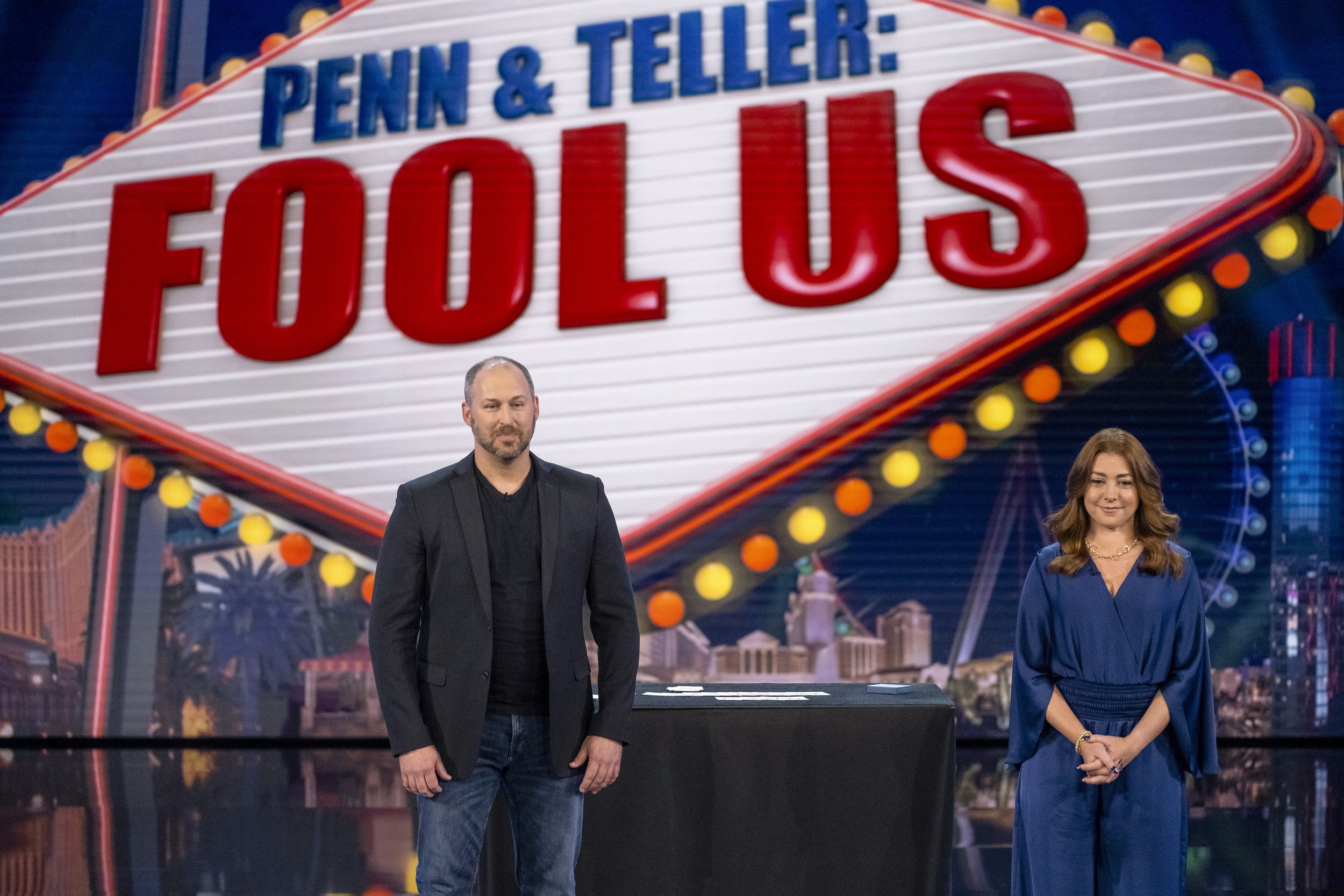
The 4F invitation doesn't arrive early in a career. Neither does a Fool Us appearance. Neither does a review in the New York Times.
Each of those recognitions is the result of years of the kind of work described above — not just practicing, but performing, failing, adjusting, performing again. Competing in front of peers who know every technique and have no reason to be generous. Returning to the table after a performance that didn't go the way it was supposed to and figuring out why.
The bio landmarks matter because of what they represent: external verification, by people who know exactly what they're looking at, that the standard is real. But the landmarks are the surface. The years of practice underneath them are what you're actually buying when you book a performer who has them.
Most performers who call themselves professionals reach a functional level of competence and stop there. The work to go beyond that — to develop technique that holds up in front of the world's most knowledgeable audiences, under the hardest possible conditions — is work that the majority never do. Not because they can't, but because it requires a specific kind of commitment that most people find difficult to sustain for twenty years.
What This Means When You're Evaluating an Investment
There is a version of the conversation about entertainment costs that focuses entirely on the event itself: how many hours, how many guests, what's included in the rate. That conversation isn't wrong. But it's incomplete.
The fuller version of the conversation is about what you're actually accessing. Not an hour of entertainment, but the product of two decades of deliberate practice, professional competition, peer recognition, and performance under pressure in more than fifty countries.
When guests at your event watch something happen three inches from their hands and have no explanation for it, that's not a trick. That's the visible surface of an enormous amount of invisible work.
“His true talent is in storytelling — he would draw each guest in, then reveal a surprise turn or illusion. Every encounter left people laughing and in wonder, with others gathering around to have their own experience.”
The people gathering around aren't there because someone flipped a coin. They're there because what they just witnessed made them want to see it again — and because something in the performance made them feel that it was worth standing close to.
That doesn't happen by accident. And it doesn't happen at the beginning of a career.
One More Thing
The phrase "you get what you pay for" is overused to the point of meaninglessness. But in entertainment — where the gap between competent and exceptional is invisible until you're standing in the room watching it — the version of that idea that's actually worth holding onto is this:
The difference between an event that was fine and an event your guests are still talking about six months later is usually not the venue, the food, or the flowers.
It's the moment that nobody saw coming.
Building that moment reliably, across twenty years and fifty countries and every kind of audience, is the thing that costs what it costs.
The math, at that point, tends to take care of itself.
If you'd like to discuss what this experience looks like for your event, [reach out here]. And if you're still building context on what distinguishes this kind of work, [the first piece in this series on close-up magic] and [the second on how to read a performer's credentials] are good places to start.