

This is Part 5 of a 5-part series on luxury close-up entertainment
Article #1 - The Difference Between a Magician and a Sleight-of-Hand Artist
Article #2 - What Penn & Teller: Fool Us Really Tells You About a Performer
Articles #3 - What 20 Years at the Card Table Actually Looks Like
Article #4 - The Night I Followed a Comic at the Ritz-Carton, Naples
Article #5 - What to Look For When Hiring a Luxury Entertainer for a Private Event
What to Look For When Hiring Luxury Event Entertainment for a Private Event
Most people who plan private events are good at planning private events. They know the right caterers, the right venues, the right florists. They have vendors they trust and relationships that have earned that trust over years.
Entertainment is the category where that confidence often runs out, especially for weddings and private events where luxury talent should elevate the room, not dominate it.
Not because it's complicated — but because, at the level often booked for high-net-worth individuals or celebrity hosts, the signals that separate a genuinely excellent entertainment hire from a merely adequate one are not obvious from the outside. A polished website, a reel of highlights, a list of impressive-sounding credits: these can describe a performer at almost any level. They don't tell you what happens in the room.
This guide is for anyone who has ever booked entertainment and gotten something different from what they expected — and for anyone who wants to make sure that doesn't happen at their next event, where the goal is an unforgettable experience.
Start With the Discipline, Not the Résumé
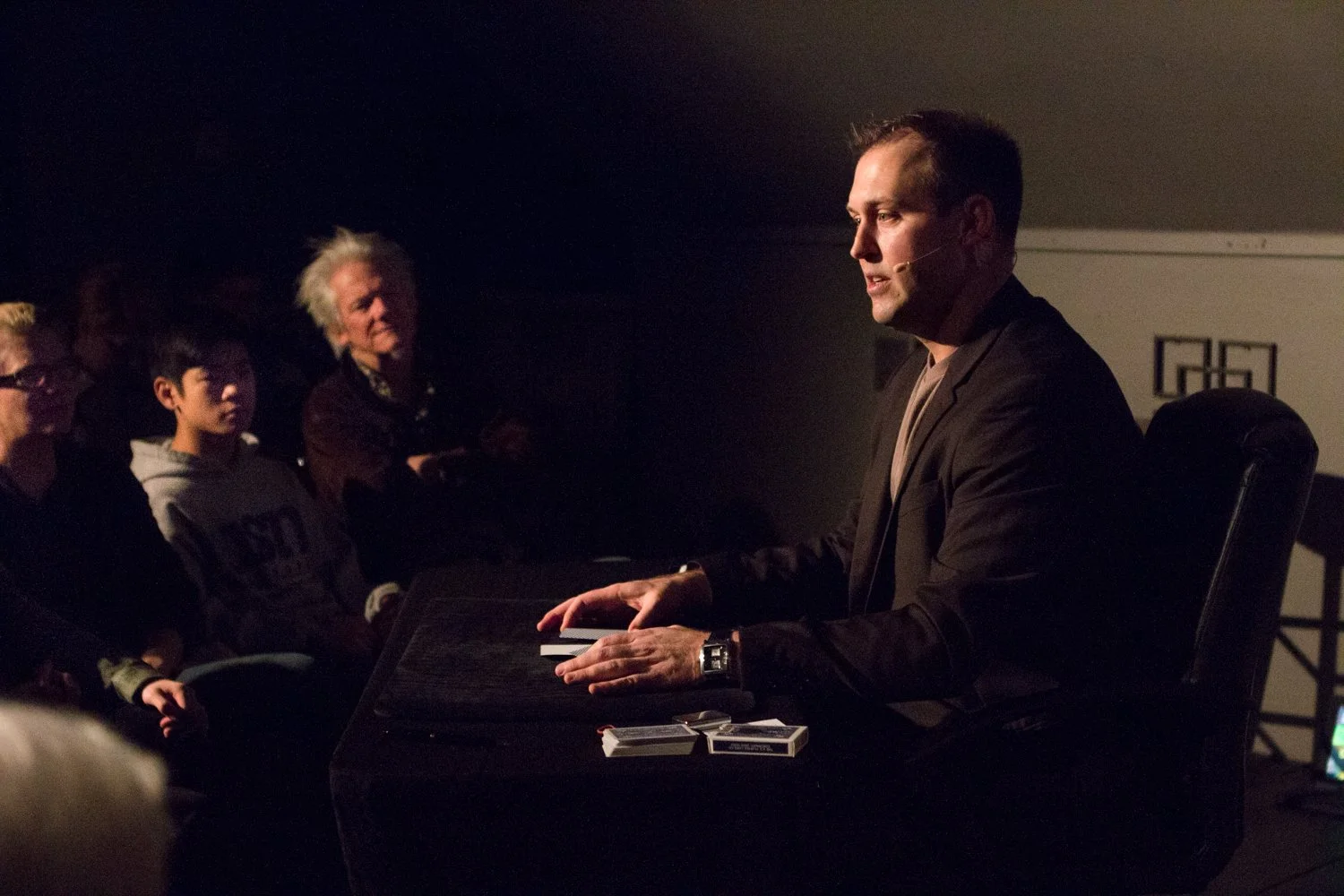
The first question to ask about any entertainer is not how long they've been performing or how many clients they've had. It's this: what is their primary discipline, and how specifically have they developed it? As part of that evaluation, ask for references or recent video footage so you can verify real ability, not just polished claims.
Generalists — performers who do a bit of everything, who bill themselves as "entertainers" broadly — tend to make broad promises, while a live jazz band, a DJ handling weddings and parties, an opera singer, or a celebrity chef points to a clearly defined craft. That competence is often enough for a casual setting. For a private event where the entertainment is expected to be a genuine highlight, it rarely is.
The performers who produce the most memorable experiences have usually spent decades developing a single, specific skill to a professional level. That can mean music built around a specific format, from a band scaled to the room and guest list to specialty acts designed for a particular atmosphere. Not "magic" in the broad sense, but close-up sleight of hand specifically. Not "comedy" in general, but a particular kind of conversational material tailored to intimate rooms. The narrowness of the focus is not a limitation — it's the thing that makes the work remarkable.
Ask who you're considering what they have spent the most time developing. The answer tells you more than a decade of credits.
Look for External Validation, Not Just Client Testimonials

Client testimonials are useful. They confirm that a performer showed up, was professional, and left people happy. What they can't tell you is whether the performer is operating at the highest level of their craft — because most clients don't have the reference points to make that judgment.
External validation is different. It comes from people who do have those reference points: peer organizations, industry publications, competitive circuits, television programs built around expert evaluation, and sometimes an externally verifiable track record or specialist reputation — for example, having performed at events since 2010 or being known for high-impact choreographed performances.
In the world of close-up sleight of hand, those benchmarks are specific. Membership in invitation-only professional organizations — ones where admission is by peer referral, not application — signals that a performer has been recognized by the most demanding audience they'll ever face. Appearances on programs like Penn & Teller: Fool Us, where the explicit goal is to stump two of the most technically knowledgeable people in magic, represent a level of verification that no client testimonial can replicate. Coverage in publications like the New York Times, in the context of the craft itself, is another.
These aren't vanity credentials. They're the closest equivalent the entertainment world has to a professional license — external, verifiable, and earned by people who knew exactly what they were evaluating. That can also include a featured reputation for a defined specialty, not just media mentions or TV appearances.
When you're comparing performers, ask what external recognition they've received. Not from clients, but from peers and institutions within their discipline.
Match the Format to the Event

One of the most common entertainment mismatches is a format that doesn't fit the room.
A stage show requires your guests to be an audience. They sit, they watch, they applaud. For events built around a formal program, that's appropriate, and aerialists can create a striking visual spectacle for a luxury gala or even certain outdoor events. For private dinners, cocktail receptions, intimate corporate gatherings, or hospitality suites — events where your guests are there to connect with each other, not to watch a performer — it works against the evening's natural energy.
Close-up entertainment — magic performed at arm's length, in small groups, moving through the room — is built for a different kind of event. Other performance acts may involve dancers, stilt walkers, or acrobats, and those formats usually work best when the event is designed around them. Close-up magic doesn't interrupt the gathering; it becomes part of it. Guests don't have to stop what they're doing to be entertained. The entertainment finds them where they are, produces a moment, and moves on — leaving behind a conversation that wasn't there before.
Before you book anyone, ask: will my guests need to be an audience, or will this experience happen with them? The answer should match the kind of event you're building, including the event theme and whether you want custom visual elements or full stage shows.
Evaluate the Consultation, Not Just the Performance
How a performer engages with you before the event tells you a great deal about what they'll do in the room.
A performer who asks specific questions about your guests — who they are, what they do, what the event is meant to accomplish, what kind of experience you want them to leave with — is approaching the booking as a custom experience. That conversation should also clarify what can actually be tailored, from the setlist to pacing, presentation, and overall style. A performer who doesn't ask those questions is approaching it as a standard deployment.
The difference matters because the experiences they produce are different. An entertainer who understood your room before they arrived will perform differently in it than one who showed up with a pre-packaged set. For corporate events, that may include presentation details that fit the format. Both may be competent. Only one is building something specific to your guests.
Ask prospective performers what they'll want to know about your event. If the answer is detailed and curious, that's a signal.
Consider What You Want Guests to Remember
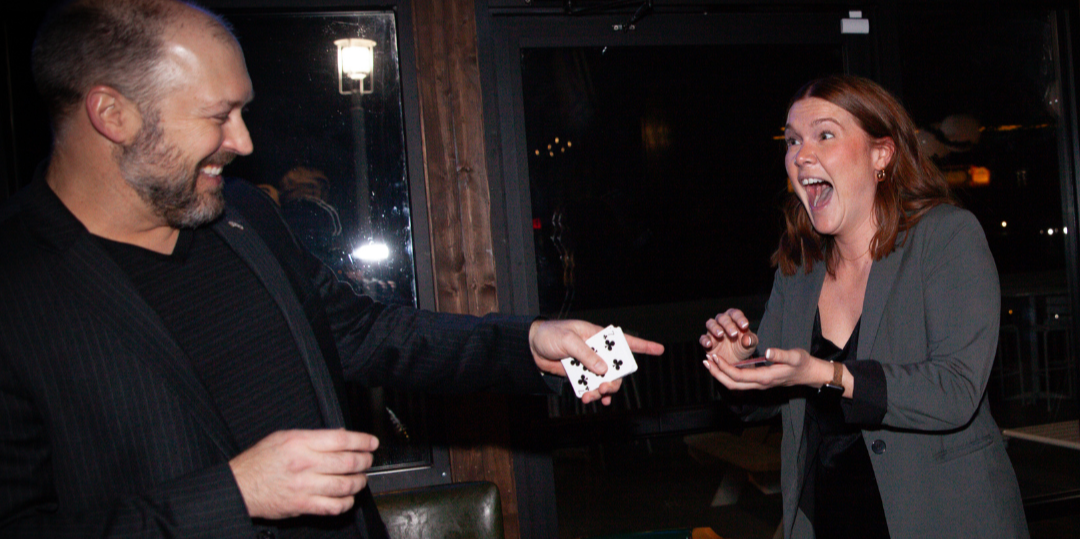
After the event is over, guests will remember two or three things. Usually: the food, one conversation that surprised them, and one moment that they couldn't have predicted.
The last category is where entertainment lives or dies. A performance that was pleasant but predictable doesn't produce that moment. A performance that was technically excellent but impersonal doesn't produce it either.
What produces it is a performer who understood the room well enough to create something that felt impossible — not just as a feat, but as an experience. That result depends as much on discretion and precise behind-the-scenes execution as on talent, especially at prestigious events. The kind of thing someone describes to a colleague three days later and can't fully explain. The kind of thing that becomes, for the people in the room, the shorthand for the whole evening.
Luxury bookings can involve bespoke rider requirements, backstage catering and security, and specific sound and lighting setups. Some acts also travel with their own sound engineers or other touring crew, which is often part of what makes the event unforgettable.
“It was such a fun experience that our guests were talking about throughout the entire program.”
Protect that lasting impression with a formal contract that covers performance duration, set times, performance windows, emergency clauses, privacy expectations such as NDAs or limits on photos and social posts for high-profile clients, backstage security coordination, and comprehensive liability insurance.
That's the benchmark. Not applause at the end of a set. A conversation that continued long after the performer left the room.
The Short Version
If you take nothing else from this guide, take these four questions into your next entertainer search:
What is this performer's primary discipline, and how deeply have they developed it?
What external validation — beyond client testimonials — have they received from within their field?
Does the format they work in match the kind of event I'm building?
And when they consulted with me before the event, did they want to understand my guests?
The answers will narrow the field considerably. What remains will be a significantly shorter list — and a significantly better hire.
READ THE FULL SERIES
This is the final piece in a five-part series on luxury close-up entertainment. If you're joining here, the earlier pieces cover [what distinguishes a sleight-of-hand artist from a magician], [how to read a performer's credentials], [what two decades of professional practice actually looks like], and [a behind-the-scenes account of performing for a room of company Presidents at the Ritz-Carlton, Naples].
If you're planning a private or corporate event and want to discuss what this experience looks like in your room, [reach out here].