
THE CRAFT · CORPORATE EVENTS · CLOSE-UP MAGIC
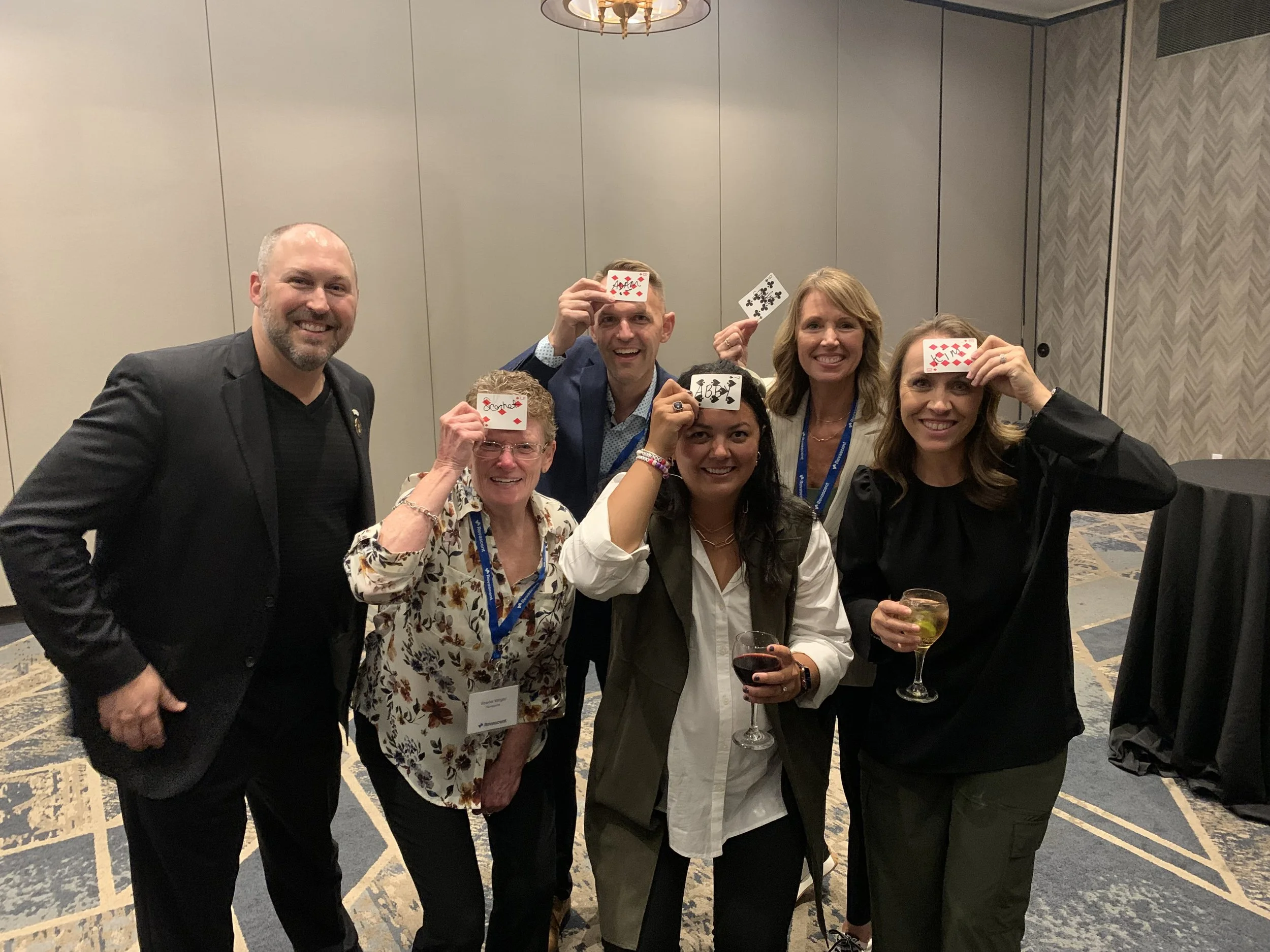
A corporate cocktail hour that started pleasantly and ended with screams of amazement. A signed card that nobody planned on keeping. And a woman who followed the magic from group to group because she was not willing to let the evening end.
Jason Michaels | 8 min read | The Craft | Corporate Events | Close-Up Magic
“The Revascent all-staff event looked like every corporate cocktail hour I have ever walked into. People standing in line at the bar. Small plates being circulated from appetizer stations set up around the room. Clusters of colleagues finding each other, catching up, doing the pleasant social work that precedes a formal evening.”
Nobody had arrived expecting anything extraordinary. Nobody had been told to expect it. The evening was pleasant. That was its ambition. To be pleasant and well-organized and a good opportunity for people who worked together to be in the same room at the same time.
I walked in with a deck of cards.
How a room changes.
I found a small group — men and women mid-conversation, the easy back-and-forth of people who knew each other well — and introduced myself. The initial response was what it almost always is in a corporate setting: polite, slightly cautious, the professional reserve of people who are not quite sure what they have agreed to by stopping to listen.
And then the magic began to happen. Not to the room — to them. Specifically, individually, in their hands. A card chosen and signed. Something impossible occurring with it. And then another. And then another. The reserve dissolved the way reserve always dissolves when something genuinely extraordinary happens to a person rather than around them — not gradually, but all at once, at the specific moment when the impossible occurs and there is no longer any point in maintaining composure about it.
One woman in the group had an experience with the magic that changed the quality of her attention entirely. Whatever had happened in her hands had not resolved when I moved to the next group. She followed.
Not because I asked her to. Not because there was a program or a structure that suggested she should. Because she was not finished with the experience and the experience was moving away from her and she was not willing to let it go.
“That impulse — to follow something extraordinary rather than let it move away — is one of the clearest signals available that what has occurred is not entertainment. Entertainment ends. You receive it, you respond to it, you return to where you were before it happened. What this woman was following was something that had not finished happening to her yet. The experience was still open. And she wanted to stay inside it.”
What happened to the room.
As the evening continued the room reorganized itself around the experience in a way that no event planner had designed and no agenda had anticipated. The small group following grew. People who had witnessed a reaction from the corner of their vision came closer to understand what was happening. People who had been approached for magic and were now carrying their own signed card — their own impossible souvenir — brought colleagues over to watch it happen to someone new.
The structure of the evening changed. Not the schedule — the quality of the room. The energy that had been pleasantly distributed across a hundred separate conversations began to concentrate. The event that had started as a pleasant professional gathering became something that had a center, something happening in it worth gathering around, something that turned a collection of colleagues into a group of people sharing an experience.

There was one effect that became the specific focal point of the evening. A spectator selects a card, signs it with their own pen — their own handwriting, their own name on the face of the card — and then the impossible occurs with it. The signature is the proof. The card that comes back is unambiguously theirs. There is no version of events in which it could be a different card. And yet it does something that their card cannot do.
This group wanted to see it again. And again. Not because they thought they would catch it the second time — nobody had caught it the first time — but because they wanted to have the experience again, and to watch someone else have it for the first time, and to see the reaction on a new face that matched the reaction they remembered on their own.
The souvenir nobody planned for.
At some point during the evening someone in the group asked whether they could keep their signed card.
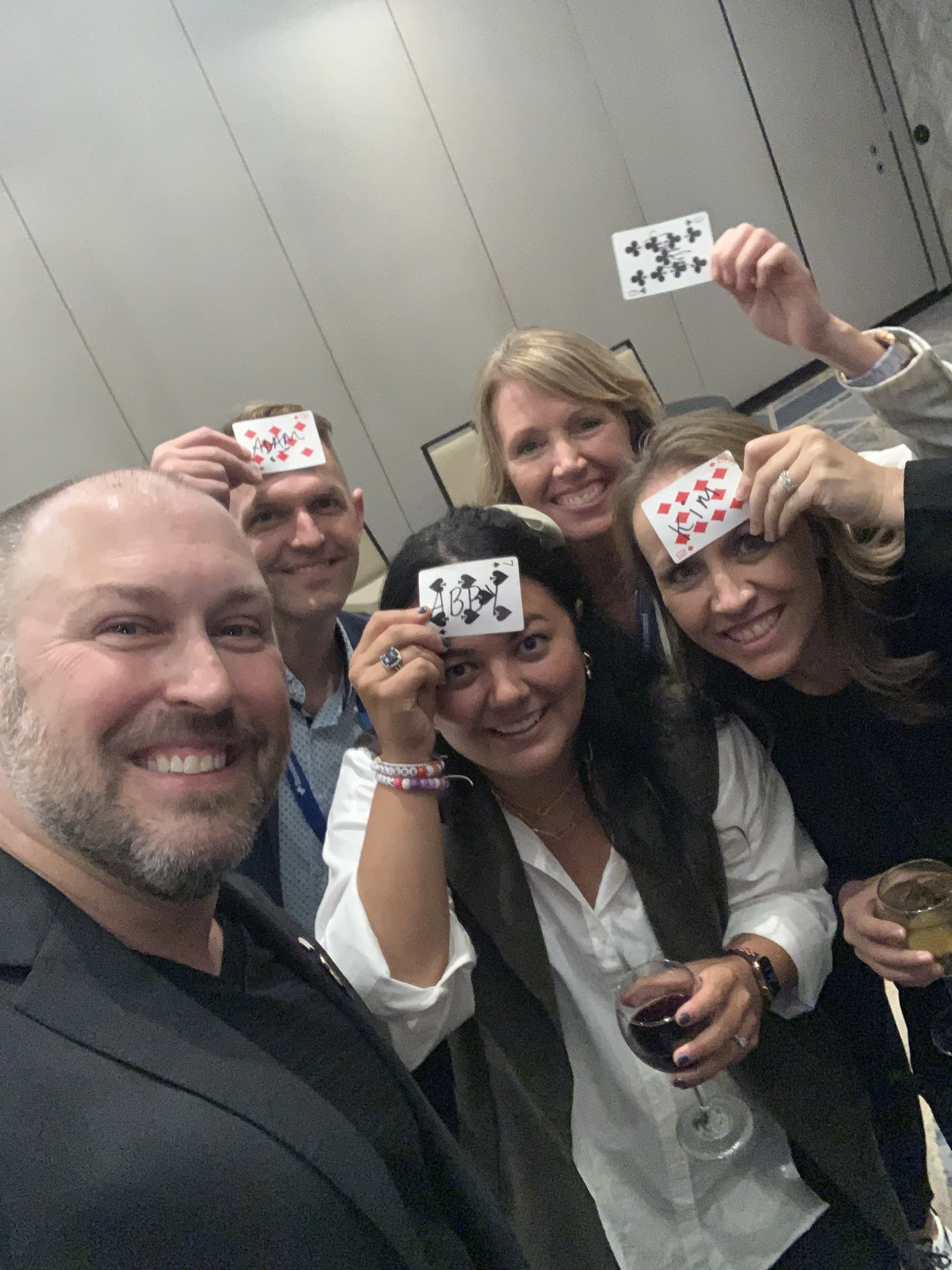
Nobody had planned for this. The signed card is not a prop designed to be kept. It is a standard playing card with a name written on it in marker. It costs less than a penny. There is nothing about it that was intended as a keepsake or a memento or a physical reminder of anything.
But it was the card that had done the impossible. It was the specific object that had been in their hands when something occurred that they could not explain. And they wanted to keep it — not because it was valuable, but because it was the evidence. The physical proof that the experience had been real, that they had been there, that something had happened to them personally and not to a general audience watching from a distance.
Once one person asked, everyone asked. Each person in the group wanted their own signed card. Their own impossible souvenir. Their own piece of physical evidence that what had happened to them that evening had actually happened.
The five-dollar deck produced something that every person in the room wanted to own. Not the deck — a card from it. A specific card with their name on it that had done something impossible in their hands. The humble object, by the end of the evening, had become the most personally significant thing in the room. No production design had achieved that. No catering. No venue. A deck of cards and thirty years of invisible practice and the specific thing that happens when both of those meet a room of people who came in expecting a pleasant evening.
The stages of what actually happens.
The Revascent evening is not unusual. It is the pattern — played out across twenty-five years and more than fifty-five countries in every variety of room — of what world-class close-up magic reliably produces when the conditions are right. The stages are consistent enough to be named.
STAGE ONE
The Pleasant Room
Every gathering starts here. People arrived with low expectations for the entertainment element, if they were thinking about it at all. The room is functioning as rooms function — conversation, drinks, the social choreography of a professional event. This is where the evening will stay if nothing genuinely extraordinary occurs.
STAGE TWO
The First Contact
A small group is engaged. The initial response is polite caution — the professional reserve of people who have not yet decided what they have agreed to. The magic begins. It happens to them individually, in their hands, under their scrutiny. The reserve begins to dissolve.
STAGE THREE
The Break
The impossible occurs. Not approximately impossible — impossible. The signed card, the named thought, the thing that should not exist and does. The composure collapses all at once. The silence comes first, brief and complete. Then the eruption. Then the turn to the person next to them.
STAGE FOUR
The Following
The person who has had the experience does not want to let it end. They follow to the next group. Others who have witnessed the reaction come closer. The performance begins to attract its own audience — not because it is loud or spectacular but because genuine presence is visible from across a room and people move toward it instinctively.
STAGE FIVE
The Shared Reality
The room has reorganized around a center. The individual conversations have not disappeared but they have a different quality — the specific warmth of people who are now connected by something that happened to all of them in the same room on the same evening. The pleasant corporate gathering has become something else. Not because anyone planned it that way. Because something genuine occurred.
STAGE SIX
The Souvenir
Someone asks to keep their signed card. Then everyone asks. The five-dollar object has become the most personally significant thing in the room — not because of what it is, but because of what happened to it, and what that means about what happened to the person who was holding it. The humble deck has produced something irreplaceable. The evening has become a story that belongs to everyone who was there.
What this means for the person planning the event.
The Revascent event started pleasantly. It ended with screams of amazement, a small crowd that had organized itself spontaneously around something genuinely extraordinary, and a group of people leaving with signed cards they had asked to keep because they wanted evidence that what had happened to them was real.
Nobody planned any of that except the first step. The decision to bring world-class close-up magic into the room. Everything that followed was what world-class close-up magic does when it is given the right room and the right people and the conditions that allow it to work properly.
The person planning an event cannot manufacture Stage Four — the following — or Stage Five — the shared reality — or Stage Six — the souvenir that nobody anticipated. Those emerge from what precedes them. What the person planning the event can do is make the decision that creates the conditions for all of it: to bring something into the room that is genuinely at the limit of human skill, that happens to people personally rather than to an audience collectively, and that produces the specific experience of genuine impossibility in someone’s own hands.
The pleasant room is a fine thing. Most events produce it. The event that produces something else — the one that turns a corporate gathering into a party, that sends people home with a signed card and a story they will tell for years — requires one decision that most event planners have not yet made.
The humble deck made it possible. Thirty years of invisible practice made it real. The woman who followed from group to group was the proof that it had worked.
The Humble Deck: Why The Most Ordinary Object in the Room Produces the Most Extraordinary Experience
The first article in the series — on what a five-dollar deck of cards carries into every room, and why its ordinariness is the condition that makes the extraordinary possible.
ABOUT JASON MICHAELS
Jason Michaels is a sleight-of-hand artist, keynote speaker, and author based in Nashville, Tennessee. He is President Elect of the International Brotherhood of Magicians and a member of Fechter’s Finger Flicking Frolic (4F), an invitation-only gathering of the world’s most respected close-up performers. He has appeared on Penn & Teller: Fool Us and has been featured in The New York Times. Over twenty-five years, he has performed in more than 55 countries for private clients, Fortune 500 corporations, military leadership, and luxury brand events.
He is the author of You Can Do the Impossible, Too! — a memoir about growing up with Tourette Syndrome and building a career that requires absolute precision.
To inquire about close-up magic for corporate events and private gatherings, visit jasonmichaelsmagic.com or reach out at jm@jasonmichaelsmagic.com.
BOOK YOUR EVENT
Turn your next event into the one they still talk about.
Close-up magic for corporate events, VIP receptions, and private gatherings. Limited dates available each season. Tell Jason about your event and he’ll respond personally within 24-48 hours.
Prefer email?
EVENT INQUIRY
A few details help Jason respond meaningfully. This is the beginning of a conversation, not a booking form.