
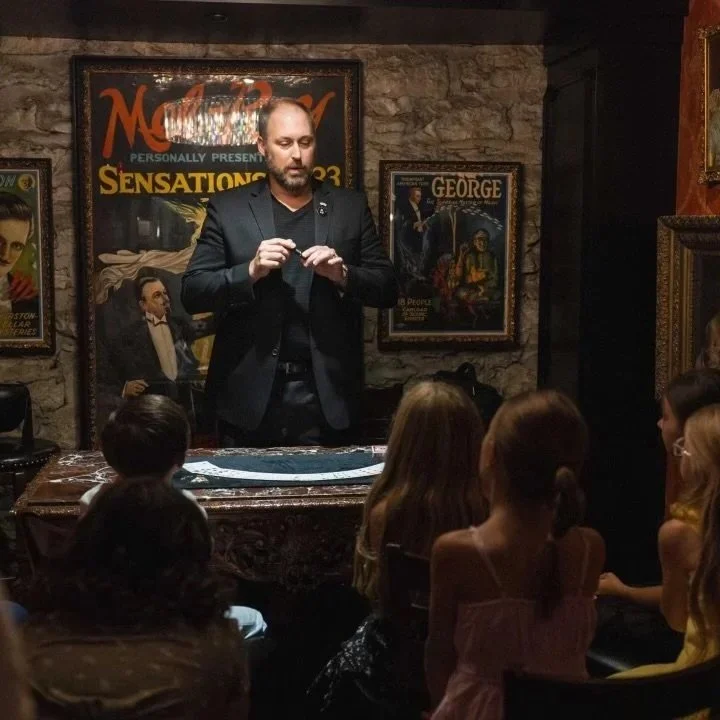
Luxury Close Up Magic Experience: Why Close-Up Sleight of Hand Is a Luxury Good, Not Hyperbole
The word "luxury" has a problem.

It has been applied to so many things — luxury apartments, luxury SUVs, luxury fast-casual dining — that it no longer reliably means anything. At this point it functions primarily as a price signal, a way of saying "this costs more than the regular version." Whether it actually is more valuable, more rare, more worth the investment is a separate question that the word has largely stopped answering.
Which makes it worth asking what a luxury good actually requires — and whether a luxury close-up magic experience truly qualifies. At its highest level, it does: a luxury close up magic experience is world-class close-up sleight of hand defined by human mastery that cannot be reproduced at scale and is inseparable from the specific performer who spent years earning it. That is the standard discerning buyers already use in other categories, whether they care about a hand-rolled Cohiba, a great bottle of wine, a suit from a Savile Row tailor, or a meal at a three-Michelin-star kitchen.
When you pull those things apart, a pattern emerges. This piece is for people who already understand the difference between expensive and exceptional and want a clear way to judge close-up magic by the same standard: what luxury means, which criteria turn sleight of hand into a genuinely luxury experience, and how to tell irreplaceable expertise from polished but ordinary entertainment before investing in it.
What a Luxury Good Actually Is in World Class Magic
Forget price for a moment. Price is a consequence, not a cause.
A luxury good, properly understood, has three characteristics that aren't interchangeable with marketing language.
The first is that it requires irreplaceable human mastery to produce. Not skill in the general sense — mastery in the specific sense: a level of expertise developed over decades, by a particular person, that cannot be outsourced, replicated by machine, or approximated by someone with less time invested. The tobacconist who rolls a great cigar has spent years learning to read the leaf. The tailor who builds a great suit has developed a judgment about how fabric moves on a body that exists nowhere in a pattern book. You are purchasing the accumulated result of their specific history.
The second is that it cannot be reproduced at scale. The thing you're buying is inherently limited — by the hours in a craftsman's day, the supply of a particular vintage, the nature of a performance that can only happen once, in one room, for one group of people. Scarcity here isn't manufactured by withholding supply. It's structural. The product can't be made any other way.
The third is that the experience of it is shaped by who made it, not just what it is. A great whisky doesn't taste like itself — it tastes like the distillery, the cask, the year, the person who made the decisions along the way. A great performance doesn't feel like entertainment in the generic sense. It feels like a specific encounter with a specific person's specific expertise. The maker is present in the thing.
These are the criteria that matter. And they map directly onto what a world-class sleight-of-hand performance actually is.
The Mastery Criterion in Close Up Magic
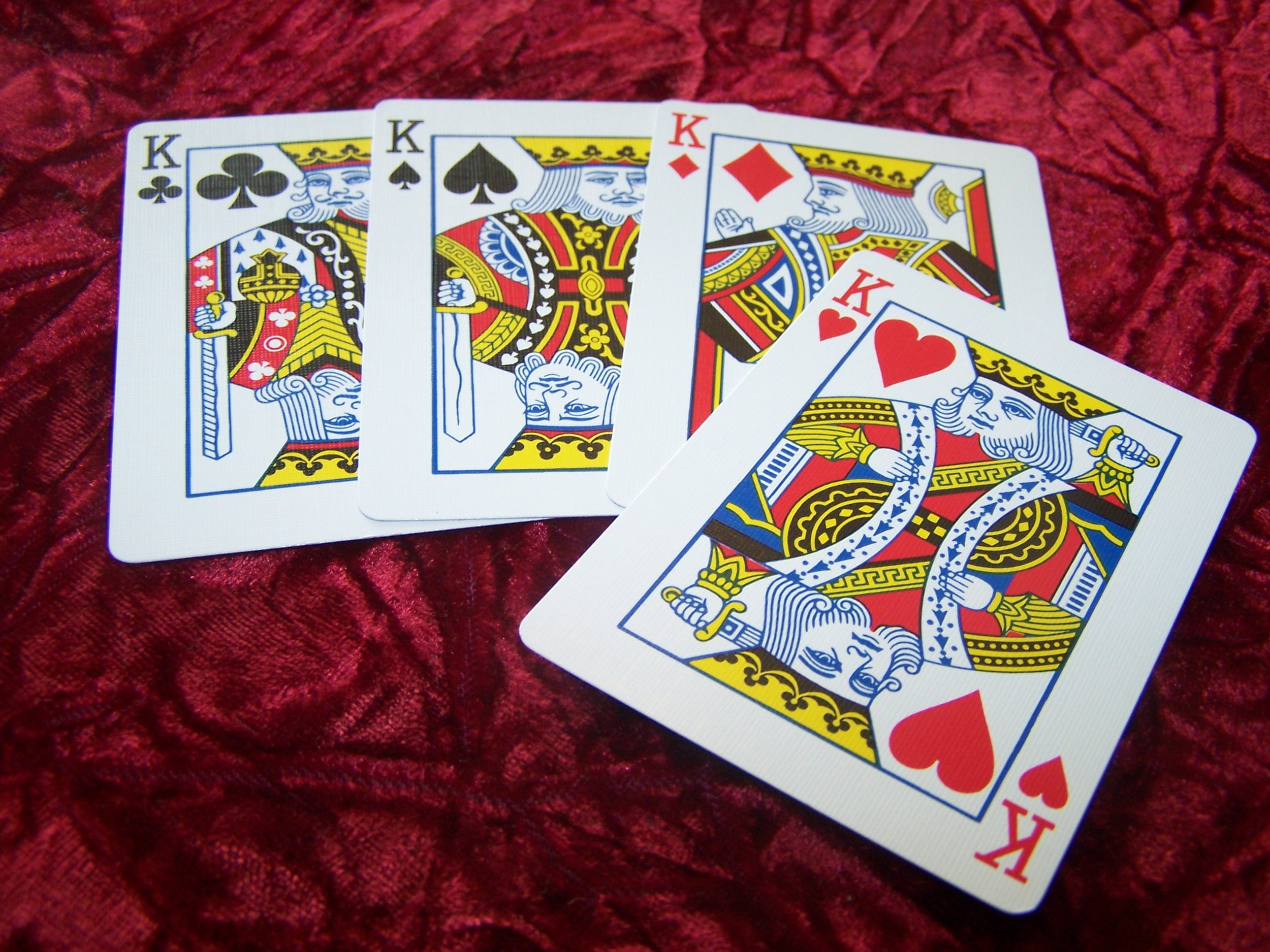
There is no shortcut to genuine close-up sleight of hand at a professional level. The mechanics of the craft — a specific card control, a coin technique, a particular sequence of moves — require years of deliberate practice to develop to the point where a trained eye can't catch them at arm's length.
That practice isn't a ramp you climb once. It's a standard you maintain. Technique developed last year degrades if it isn't worked this year. The performance conditions are exacting: the audience is eighteen inches away, watching your hands with complete attention, and anything less than invisible execution shows. There is no curtain, no distance, no margin.
The performers who operate at the highest level of this craft have typically spent twenty years or more reaching and maintaining that standard — not performing occasionally, but practicing deliberately, competing before expert peers, and having their technique evaluated by people who know exactly what to look for. The credentials that verify it — an invitation to the 4F, an appearance on Penn & Teller: Fool Us, a review in the New York Times — exist precisely because the close-up magic world developed its own system for distinguishing genuine mastery from functional competence. That distinction matters in the same way it matters in any craft where the difference between good and exceptional is invisible to the untrained eye until you're standing directly in front of it.
The Scale Criterion for Magic Shows
A world-class close-up performance cannot be mass-produced.
It can only happen in one room at a time, with one performer, for one group of people who are present in that specific moment. The performance that happened at a private dinner last Tuesday is not the same as the one that will happen at a hospitality suite next Thursday — not because the technique differs, but because the room differs, the guests differ, and a great performer reads and responds to both in real time.
This isn't a limitation. It's the thing that makes it what it is. The intimacy — the performance happening three feet from your face, with objects in your hands — is precisely the element that a stage show, a video, a screen of any kind cannot replicate. You cannot stream it. You cannot record it and give someone the same experience. You cannot send a substitute. The luxury good here is the live, unrepeatable encounter with the real thing.
That is scarcity in the structural sense. The supply is genuinely limited by the nature of the product.
The Maker Criterion: Jason Michaels

When you sit across from a performer who has spent two decades developing a specific skill to a professional standard, you are not watching a trick. You are in the presence of the accumulated result of that history — the practice, the failure, the refinement, the performance under pressure, the years of working a single technique until it holds under any condition.
That history is what you feel in the room. It's the difference between a performance that impresses and one that unsettles you slightly — that produces a specific kind of disbelief that has nothing to do with being fooled and everything to do with recognizing, at some level, that what you just witnessed was the product of something extraordinary.
A luxury good carries its maker's history in a way that a commodity cannot. A hand-rolled cigar from a master tobacconist is different from a machine-made cigar not only in the result but in the encounter with the result — the knowledge that a particular set of hands and a particular set of decisions produced the thing you're holding. Close-up sleight of hand at the highest level works the same way. The performance is the direct expression of one person's specific mastery. There is no factory version.
What This Means When You're Making a Decision
None of this is an argument that everyone should value this category of experience. Luxury goods, properly understood, are for people who have developed a taste for a specific kind of excellence and are willing to pay for the real version of it.
What it is an argument for is this: when you're evaluating whether a luxury close up magic experience belongs in the same conversation as the other things you spend money on at this level, the comparison class is fine cigars, great wine, a Savile Row suit, a private sailing charter. Not a standard magic show or party entertainment. As a luxury option for a date night or other special nights, the category is different, which means the evaluation should be different.
The question isn't whether it's expensive relative to other entertainment. The question is whether it delivers what a luxury good is supposed to deliver: the irreplaceable result of human mastery, produced in a form that can't be replicated at scale, by someone whose specific history is present in the experience.
At the level of genuine professional close-up sleight of hand, the answer to that question is straightforwardly yes, especially as an interactive experience.
Explore the Full Picture
If you're exploring what this experience looks like in practice — the credentials behind it, what two decades of professional development actually produces, or what to look for before booking — those questions are covered in detail elsewhere on this site. And if you're ready to discuss availability, venue details, and tickets for a private or corporate event or brand activation, [reach out here].