

Tourette Syndrome Books: Why “Tourette Warriors” Belongs on Every Shelf
Key Takeaways
This article is a practical guide to the best Tourette syndrome books, with a strong focus on Jason Michaels’ “Tourette Warriors,” a memoir for teens, young adults, parents, and teachers that blends storytelling with realistic coping strategies and hope.
Other important titles covered include Jason’s first book “You Can Do the Impossible, Too!,” Brad Cohen’s “Front of the Class,” and John Davidson’s “I Swear.”
Tourette syndrome is a neurological condition—not a mental illness—and people with Tourette can live fulfilling lives with proper support.
The closing FAQ tackles interesting and uplifting facts about Tourette syndrome, providing respectful information that challenges stereotypes.
Understanding Tourette syndrome can be enhanced by exploring diverse literature that blends personal stories, practical advice, and scientific insight.
Understanding Tourette Syndrome and the Power of Story
Tourette syndrome is a neurodevelopmental disorder characterized by motor and vocal tics that begin in childhood, typically between ages 5 and 7, and persist for over a year. To be diagnosed with Tourette syndrome, a person must have at least two different motor tics and at least one vocal tic that have persisted for over a year. It’s distinct from mental health challenges like anxiety or OCD, though these conditions often co-occur. Tics in Tourette syndrome can vary in intensity, frequency, and duration, and they can be involuntary, arising from altered brain function in the nervous system.
Books and personal stories serve as powerful tools for dismantling common myths about the condition. Rich personal narratives can help in understanding the challenges faced by those living with Tourette syndrome, while simultaneously showing that many individuals lead successful careers and fulfilling lives. Books can showcase the diversity of Tourette syndrome and offer relatable stories from various perspectives—something clinical materials alone cannot achieve.
The Tourette Association of America provides high-quality resources for patients, families, and professionals through established organizations and authoritative books. Many of the titles in this article align with the TAA’s mission of education and support.
Here’s what this article covers: first, a deep focus on “Tourette Warriors” by Jason Michaels, then other essential Tourette syndrome books for parents, children, and young adults, and finally a FAQ on interesting and uplifting facts about the condition. The goal is to help families, educators, and people with Tourette access stories that support more fulfilling lives.
(TITLE IMAGE) A stack of books sits on a wooden shelf, illuminated by soft lighting, creating a warm and inviting atmosphere. Among the titles, there may be resources related to Tourette syndrome, tic disorders, and the understanding of neurological conditions, providing valuable information for families and individuals affected by these challenges.
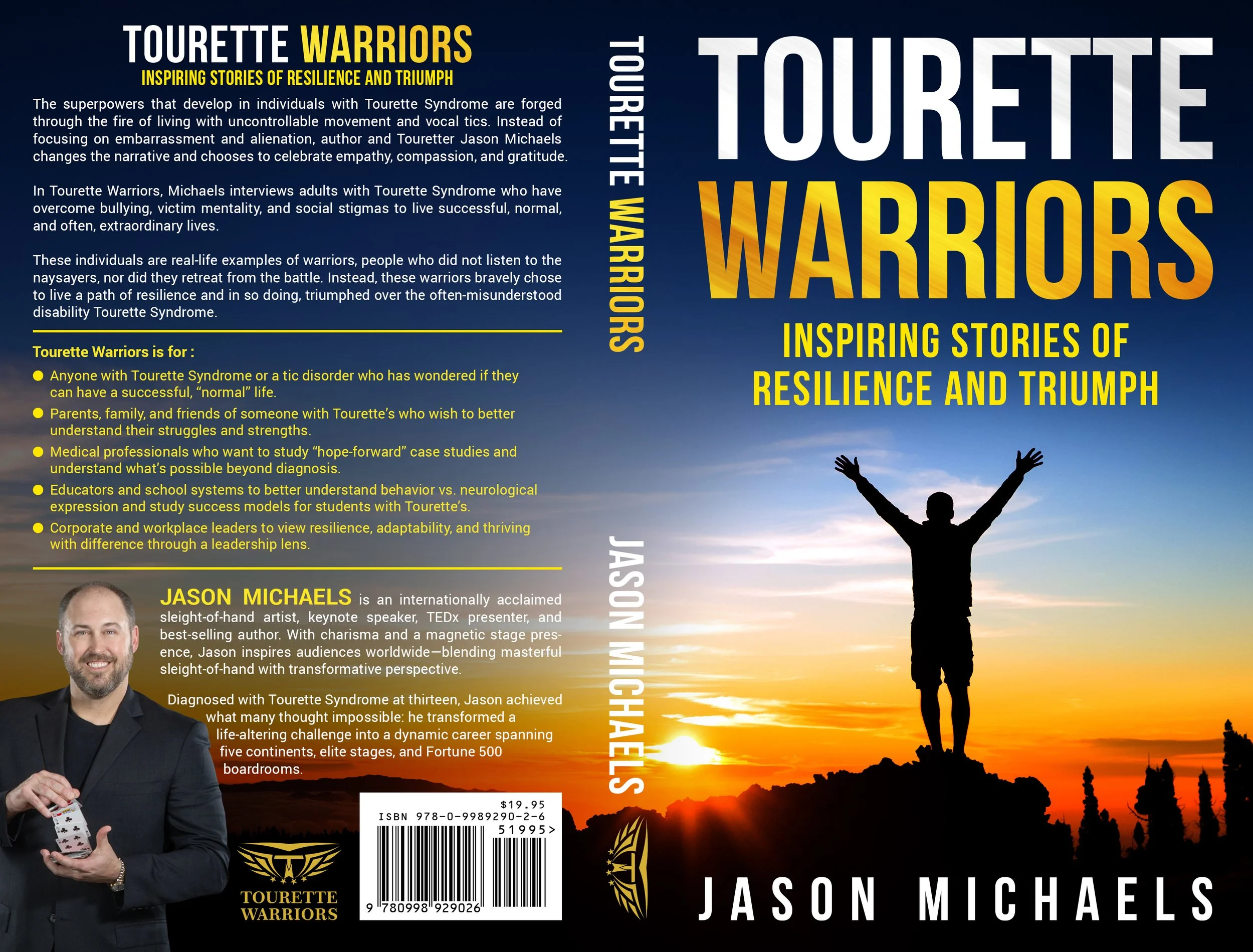
(THIS IMAGE) The cover of Tourette Warrior, a book of interviews with adults with Tourette Syndrome living successful, “normal” lives.
Spotlight on “Tourette Warriors” by Jason Michaels
“Tourette Warriors” is the main featured Tourette syndrome book in this guide, first published in the spring of 2026 by professional magician and motivational speaker Jason Michaels. The book is both a memoir and a motivational guide aimed at teens, young adults, parents, and educators who want an honest, hopeful look at life with Tourette syndrome.
The core narrative arc centers on Jason interviewing eight different adults from different walks of life and with different careers who are living successful, “normal” lives after struggling with the uncontrollable and often debilitating tics of Tourette’s as young people. These warriors come from diverse backgrounds—professionals, performers, educators—offering proof that the condition doesn’t dictate destiny.
Beyond personal story, the book offers concrete tools: reframing symptoms using strategies like Comprehensive Behavioral Intervention for Tics (CBIT), which is a proven guide for managing tics without solely relying on medication. It also covers building resilience, advocating in school and health care settings, and connecting with community organizations like the Tourette Association.
Who “Tourette Warriors” Is For
The book speaks directly to young adults and older adolescents wrestling with identity, self-confidence, and fears about the future with Tourette syndrome. Many patients experience intense stress during social situations, and this book addresses those realities head-on.
It’s equally powerful for parents and caregivers who want to see an example of children with Tourette growing into confident, successful adults. Support from family and community can significantly help individuals with Tourette syndrome develop self-confidence and improve their social relationships.
Teachers, school counselors, and youth leaders can use stories from the book to spark classroom conversations that challenge many myths about the condition. Survival manuals designed specifically for young adults provide tools for navigating home, school, work, and social situations—and “Tourette Warriors” fits this description perfectly.
The tone is honest but not clinical. It doesn’t shy away from anxiety, embarrassment, and frustration, yet it consistently models how to pursue fulfilling lives. One paraphrased lesson from the book: “Tics don’t dictate destiny—focus taught me to channel chaos into wonder.”
Key Themes and Lessons in “Tourette Warriors”
The book builds around several core themes:
Theme What It Means
Perseverance Pushing through setbacks without giving up
Radical Self-Acceptance Embracing your whole self, tics included
Owning Your Story Becoming the narrator of your life
Choosing Courage Showing up in public spaces despite fear
Redefining “Normal” Understanding that normal is what you make it
Jason discusses how the book reframes Tourette syndrome from a life-limiting label into one aspect of a complex person, while still acknowledging medical realities and the role of health care professionals. Many people believe that individuals with Tourette syndrome cannot control their tics, but patients can learn to manage and moderate their tics through various techniques and strategies.
The book highlights passages where the interviewees talk about managing co-occurring challenges like ADHD or OCD, making it clear that Tourette exists in a wider context without labeling it as a mental illness. Depression and anxiety affect many with the condition, but associated conditions don’t define the person.
Take-home lessons from “Tourette Warriors”:
Connect with warriors who’ve walked your path; isolation is the real tic-killer
Treatment options include behavioral strategies, not just medicine
Your exact cause doesn’t determine your outcome
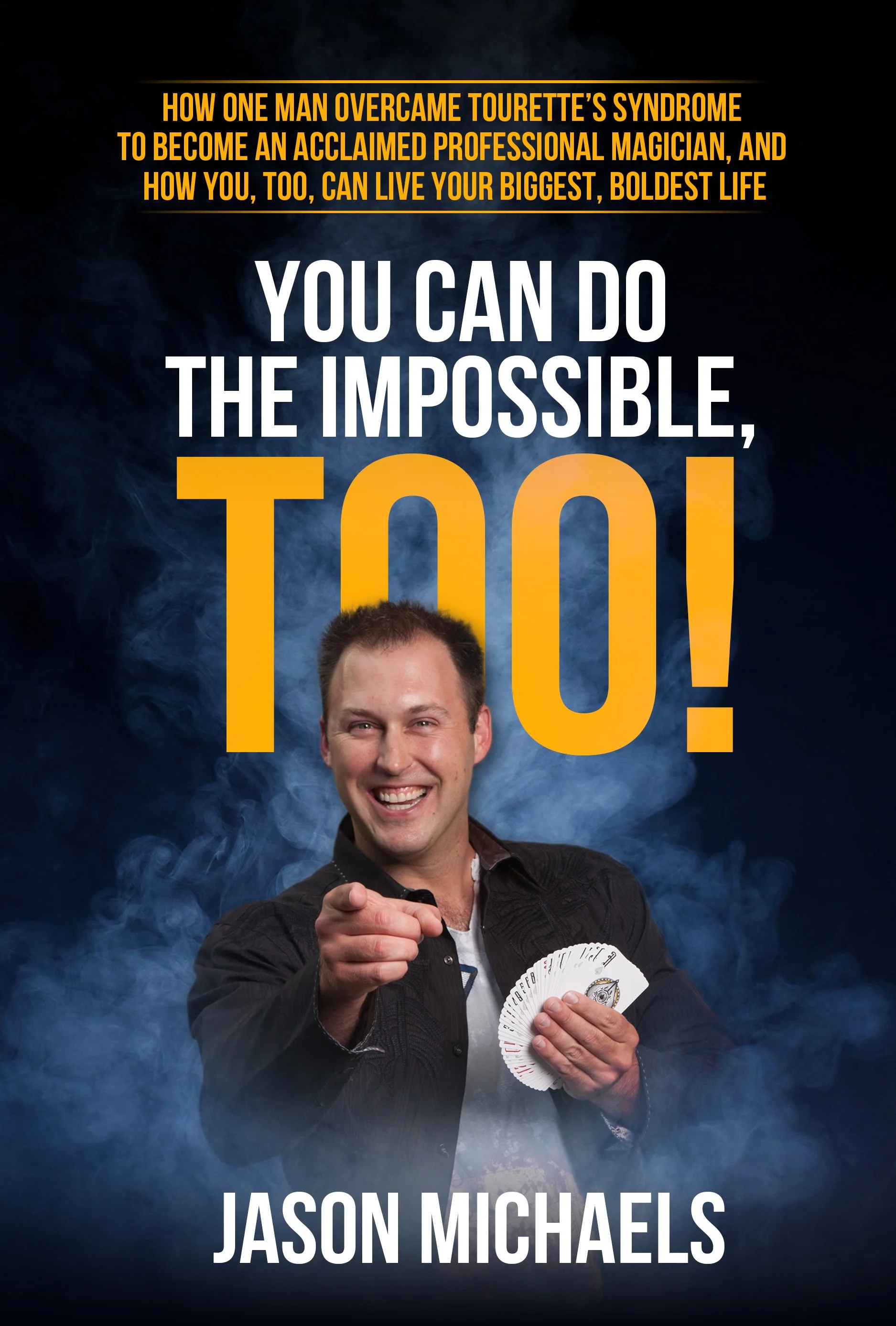
From “You Can Do the Impossible, Too!” to “Tourette Warriors”
Jason Michaels’ first book, “You Can Do the Impossible, Too!”, is an earlier, more general motivational work that shares his journey into magic and overcoming personal obstacles. It addresses universal themes like goal-setting and performance psychology.
“Tourette Warriors” builds on that foundation by talking more openly and specifically about Tourette syndrome and life with visible and invisible tics. Together, the two books form an informal series: the first focuses on the broader idea of doing the “impossible,” and the second applies that lens directly to Tourette and neurodiversity.
Readers who enjoy “Tourette Warriors” and want more background on Jason’s performance career and mindset should explore “You Can Do the Impossible, Too!” It’s a natural companion without shifting focus away from the Tourette-centered narrative.

A magician with Tourette Syndrome (Jason Michaels) is performing a mesmerizing card trick on stage, illuminated by bright lights that enhance the excitement of the performance. The scene captures the audience's captivated expressions, showcasing the magic of live entertainment.
Other Essential Tourette Syndrome Books and Memoirs
While “Tourette Warriors” is the main focus, it exists alongside a small but important bookshelf of Tourette syndrome books that can support children, teens, and adults. Books can offer either technical guidance for managing symptoms or personal narratives that provide emotional context.
Brad Cohen’s “Front of the Class: How Tourette Syndrome Made Me the Teacher I Never Had” tells the real-life story of a boy who endured childhood bullying and misunderstanding before becoming Georgia’s Teacher of the Year. The memoir inspired a CBS film that reached 18 million viewers and is now used in over 10,000 U.S. schools for anti-bullying education. Memoirs about living with Tourette syndrome, such as those by Brad Cohen and Josh Hanagarne, provide firsthand accounts of managing and navigating life with tics.
“I Swear” by John Davidson is a raw adult memoir tackling coprolalia (obscene tics, which only about 10% of individuals with Tourette experience), workplace navigation, and using humor to combat stigma. A common myth is that everyone with Tourette syndrome blurts out obscenities; Davidson’s book addresses this confusion directly while offering candid insights into adulthood with the condition.
Choosing the Right Tourette Syndrome Book for Your Situation
Here’s a quick guide:
If You Need… Start With…
Inspiration and practical strategies across life stages “Tourette Warriors”
School and teaching contexts “Front of the Class”
Candid adult memoir with humor “I Swear”
Parents of newly diagnosed children should consider starting with one memoir paired with a more clinical guide recommended by their health care team. Young adults and older teens should pick the story that feels most like their own life—stage performing, classroom challenges, or navigating complex tics in the workplace.
Multiple voices matter because Tourette syndrome affects people differently. Some have mild tics, others more severe symptoms. Some have significant co-occurring conditions, others do not. Another misconception is that people with Tourette syndrome cannot lead normal lives; in fact, many individuals with the condition lead successful and fulfilling lives in various fields.
Books for Parents, Teachers, and Children: Beyond Memoir
Memoirs are powerful, but many families also want a more structured children’s guide or parent handbook about Tourette syndrome. Books like “Managing Tourette Syndrome” and “Understanding Tourette Syndrome: A Guide to Symptoms, Management and Treatment” offer evidence-based guidelines for parents and professionals.
The Tourette Association and major medical centers often recommend these guides to help families talk with health care providers and navigate school supports. The CDC offers educational tools and supports free virtual training for healthcare providers through the American Academy of Pediatrics (AAP). National health organizations provide comprehensive, science-based information on symptoms, diagnosis, and treatment, including resources from centers like Yale University.
Age-appropriate children’s books make a real difference. “Tic and Twitch” by Melissa Mederos explores the challenges of growing up with Tourette syndrome and emphasizes acceptance. “Emma” by Mari Schuh is an illustrated narrative nonfiction picture book that shares the experiences of a child with Tourette syndrome, aimed at elementary students. Books that address Tourette syndrome can help educate children and promote understanding, kindness, and acceptance in classrooms.

A parent and child are sitting together on a cozy couch, engrossed in reading a colorful picture book, fostering a loving and educational moment. This scene highlights the importance of parental support in a child's development, which can be crucial for understanding various conditions, including tic disorders and Tourette syndrome.
How to Use Tourette Syndrome Books in School and at Home
Practical ideas for educators:
Read memoir excerpts aloud (like chapters from “Tourette Warriors” or “Front of the Class”) to spark conversation about kindness and inclusion
Use discussion activities that address many myths about involuntary movements
Create small Tourette syndrome book bundles for classrooms and school libraries
The Tourette Association of America provides age-appropriate book bundles to schools to help raise awareness and understanding of Tourette syndrome among students.
Parents can read Tourette syndrome books alongside their child, pausing to check in on feelings, questions, and fears. This prepares families for doctor visits and school meetings while building knowledge together.
Consider inviting authors, speakers, or local advocates (including performers like Jason Michaels when possible) to deepen the impact through assemblies or Q&A sessions. These experiences are especially powerful during transition points—entering middle school, starting high school, or moving into adolescence and young adulthood.
The goal is not to reduce a child to a diagnosis but to give them language and role models for a strong, self-aware identity that contributes to their community.
Addressing Common Myths Through Reading
Many myths about Tourette syndrome persist in popular culture, and well-written books are one of the best ways to challenge those misunderstandings.
Common misconceptions these books help correct:
That everyone with Tourette shouts obscenities (reality: only about 10% experience coprolalia)
That it is extremely rare (it actually affects approximately 1 in 160 people worldwide)
That it is a mental illness (it’s a neurological condition)
That people with Tourette cannot hold jobs or become performers, teachers, or professionals
Reading a memoir like “Tourette Warriors” or “Front of the Class” puts a human face on the condition, making it much harder to hold onto stereotypes. Most people find their assumptions challenged when they encounter real stories of achieved success.
Authors in this space explicitly address bullying, shame, and social isolation—but also model constructive responses and self-advocacy skills readers can borrow. Share what you learn with friends, extended family, and online communities across America and beyond.
From Stigma to Strength: What These Books Have in Common
Despite different writing styles and life stories, the featured books share core messages: Tourette is real, challenging, and sometimes exhausting—but it does not define a person’s worth or potential.
Each author shows that people with Tourette can and do build careers, relationships, and families. Many individuals with Tourette syndrome lead full and fulfilling lives, achieving success in various areas such as education, friendships, and careers despite their condition.
These books emphasize collaboration with health care providers, therapists, and support organizations rather than a lone “hero narrative.” While there is no cure, there are treatment options and strategies that contribute to better outcomes. The ultimate goal is not to romanticize Tourette syndrome but to frame it honestly, with room for frustration, humor, grief, and pride.
FAQ: Interesting and Uplifting Facts About Tourette Syndrome
Beyond book recommendations, readers often search for “fun facts about Tourette syndrome.” This section offers respectful, intriguing information that challenges stereotypes while highlighting strengths. Each answer focuses on surprising, positive aspects alongside key clinical understanding as of 2026.
What are some respectful “fun facts” about Tourette syndrome that might surprise people?
Many people with Tourette discover unusual strengths, such as intense focus during sports, performing arts, or creative work, where tics may temporarily lessen. People with Tourette syndrome can excel in sports and other activities, often finding that their tics lessen when they focus intensely on a task. Some individuals report heightened empathy or sensitivity to others’ emotions, which can be a real social strength. These “fun facts about Tourette syndrome” highlight possibilities, not guarantees, acknowledging that everyone’s experience is unique.
Is Tourette syndrome considered a mental illness or a neurological condition?
Tourette syndrome is classified as a neurodevelopmental disorder affecting how the brain controls movements and sounds. It often co-occurs with conditions such as ADHD, OCD, anxiety, or depression, which can complicate life but are separate diagnoses. Calling Tourette only a mental illness is inaccurate and can add to stigma; accurate language helps people access appropriate health care and support. Consult neurologists or movement-disorder specialists, as well as mental health professionals when needed, for comprehensive care.
How common is Tourette syndrome, really?
Tourette syndrome affects approximately 1 in 160 children between the ages of 5 and 17 in the United States, with a total of about 300,000 children impacted. It is a myth that Tourette syndrome is a rare condition; the reality is that the prevalence is relatively common across all cultures. Because many children have mild symptoms or never receive a formal evaluation, it may be even more common than official disease control numbers suggest. Boys are diagnosed more often than girls, though girls may be underdiagnosed when tics are subtle.
Can people with Tourette syndrome really become performers, athletes, or teachers?
Yes, many people with Tourette are successful in highly public roles, including magicians like Jason Michaels, teachers like Brad Cohen, professional athletes like Tim Howard, and musicians like Lewis Capaldi. Intense focus, passion, and practice can sometimes reduce tic expression during key moments, allowing people to perform at a high level. Success is not about pretending Tourette doesn’t exist but about building strategies, accommodations, and self-advocacy around it. Use the books discussed in this article as proof that Tourette does not close the door on big dreams.
How can I use books to support someone I love who has Tourette syndrome?
Start by reading one or two Tourette syndrome books yourself—such as “Tourette Warriors” or “Front of the Class”—to better understand day-to-day realities and emotions. Offer the person with Tourette a choice among age-appropriate titles rather than assigning a book, so they feel in control of their own story. Encourage open conversation after reading: ask what resonated, what felt different from their experience, and what support they would actually find helpful. Simply being willing to learn—and to keep learning—is one of the most powerful acts of support you can offer.
Ready to start building your Tourette syndrome book collection? Visit jasonmichaelsmagic.com to get your copy of “Tourette Warriors” and share these resources with educators and families in your community.