
THE CRAFT · SLEIGHT OF HAND · PLAYING CARD CULTURE
There is a gap between a competent card handler and a world-class sleight-of-hand artist that cannot be crossed quickly, cannot be faked, and is visible in a room within thirty seconds. Here is what that gap actually looks like — from the inside.
Jason Michaels | 8 min read | The Craft | Sleight of Hand | Playing Card Culture
“When I was a teenager just starting in magic, I was convinced I could not do sleight of hand. Not that I had tried and failed. That I was not the kind of person who could do it. So I bought gimmicks instead — specialty decks and prepared props from the magic shop that simulated the effect of technique without requiring any. They looked like magic. They worked reliably. And they were, I told myself, good enough.”
Then I performed for a family in my neighborhood. A show in someone’s living room, the kind of booking a teenage magician gets when he is starting out. After the show the father came up to me and asked, quietly, whether I had been using one of the specialty decks he had heard about.
He knew. He could see the gap between what I was doing and what the trick claimed to be. He was not trying to be unkind. He was simply telling me the truth: the experience I thought I was creating was not the experience he was having.
That moment crushed me in the specific way that only a truth you were not ready to hear can crush you. I went back to the magic shop. And this time, instead of another gimmick, I bought a VHS tape on basic card technique. I sat down with a deck of cards and I started from the beginning.
What I discovered was not that sleight of hand was easy. It was that I had been wrong about what was standing between me and it. The obstacle was not inability. It was the closed mind that had decided, before trying, that the gap was uncrossable. Once I opened that mind, the technique began to come. Slowly, imperfectly, with enormous amounts of practice and enormous amounts of failure. But it came.
That was thirty years ago. I have not stopped practicing since.
What the gap actually is.
The mastery gap in sleight-of-hand card magic is not the gap between knowing a trick and not knowing it. Any competent performer can learn a trick — the plot, the structure, the sequence of events that produces the effect. The trick is the easy part. The gap is between knowing what to do and being able to do it invisibly under conditions of active, intelligent scrutiny.
That gap is enormous. And it is measured in years, not weeks.
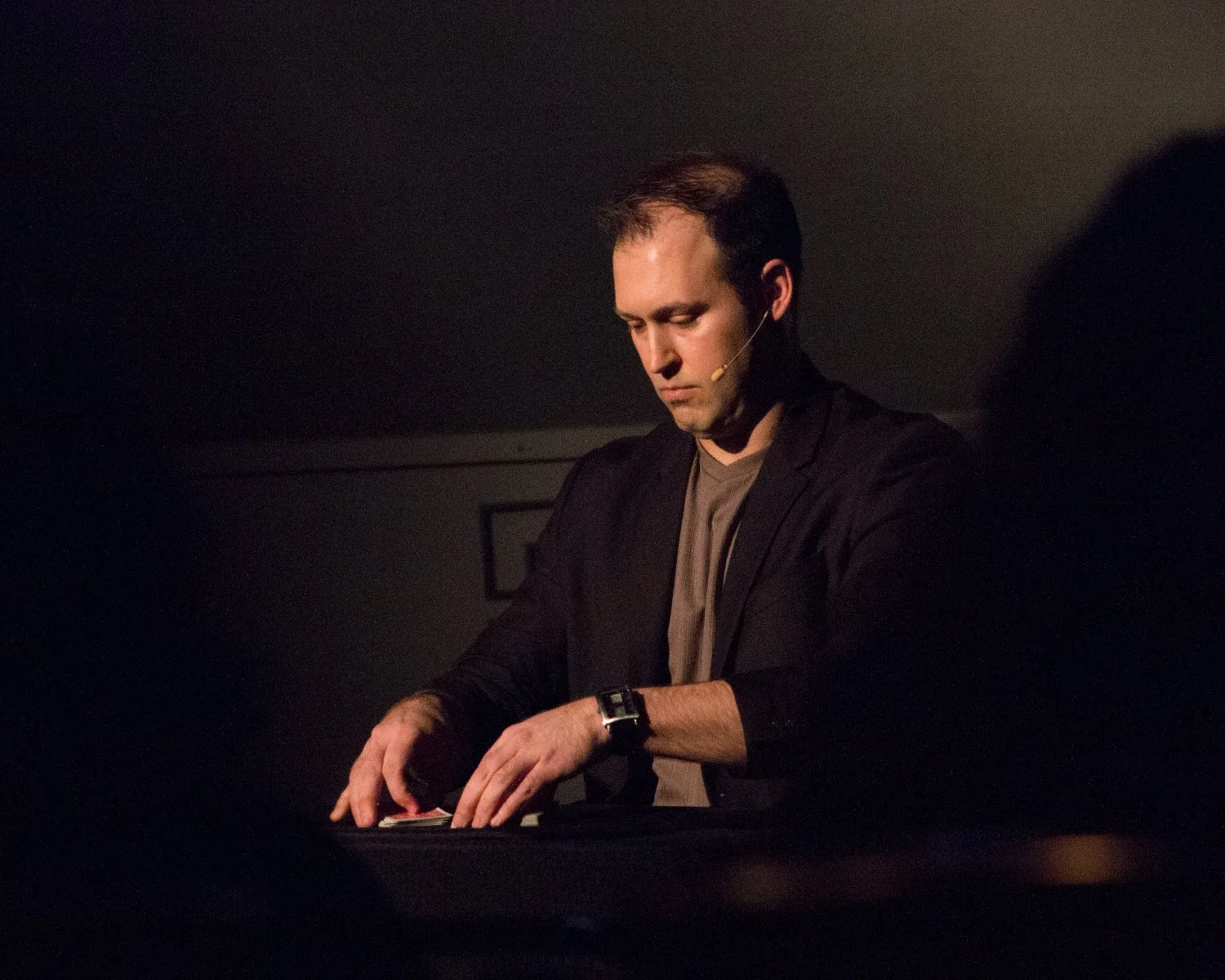
There is a technique in close-up card work called the second deal. The performer appears to deal the top card of the deck. In fact they deal the second card — retaining the top card, invisible and in position, for whatever purpose requires it. When the second deal is executed at the highest level, it is completely indistinguishable from an ordinary deal to anyone watching from any angle at any distance. Not almost indistinguishable. Indistinguishable. Period.
I once read a description of this technique by one of the most respected writers on card magic who has ever lived. He wrote that the second deal had been described as one of, if not the, most difficult of all moves to get down pat. I read that sentence when I was already an experienced performer with years of practice behind me. And I understood immediately that he was not exaggerating.
Learning the second deal to the point of reliable invisibility took me nearly a year of dedicated daily practice. Not a year of occasional attention. A year of returning to it every day, finding every angle from which it was not yet invisible, correcting that angle, and returning the next day to find a new one. A year of a technique that resisted mastery at every stage — that gave ground slowly, grudgingly, only in exchange for the specific kind of attention that most people are not willing to sustain for that length of time on a single problem.
And it still challenges me today.
“The second deal is not the most difficult technique in the close-up card repertoire. It is one of many techniques that require this quality of sustained, patient, daily attention over years before they approach the standard that genuine performance demands. The gap between a competent card handler and a world-class sleight-of-hand artist is the accumulated distance of hundreds of techniques, each one worked on for months or years, each one brought to a standard of invisibility that most people who have held a deck of cards would not believe was possible from what they have seen.”
The paradox at the center of the craft.
Here is the central paradox of mastery in this discipline, and in almost every discipline that involves genuine craft: the more the technique has been developed, the less of it the audience can see.
Twenty-five years of daily practice exists in a performance precisely so that it cannot be detected. The invisibility is the point. The mastery is present in every movement — in the angle of the hand, the timing of the action, the management of attention in the room — and the mastery is what makes every movement look like nothing at all.
This is why the gap between competent and world-class is so difficult for a non-specialist to evaluate. The competent performer and the world-class performer both appear to be doing nothing extraordinary with their hands. The difference is that the competent performer is doing nothing extraordinary with their hands, and the world-class performer is executing technique of exceptional difficulty that happens to be invisible.
The audience cannot see the difference directly. They feel it.
The feeling is not comfortable to describe because it operates below conscious evaluation. A sophisticated audience knows, within thirty seconds of a performance beginning, whether they are in the presence of something that is genuinely at the limit of human skill. They cannot always say why they know. But they know. The same instinct that tells a wine connoisseur they are drinking something exceptional before they have consciously evaluated the structure tells a room of executives that what is happening in front of them is categorically different from entertainment.
The father who recognized my specialty deck thirty years ago was exercising exactly that instinct. He could not have articulated the precise mechanism of what I was doing wrong. He simply knew that the experience was not genuine — that something was being simulated rather than done. That calibration, in a sophisticated audience, is extremely reliable. It is what makes genuine mastery matter rather than merely being theoretically admirable. The audience knows. And they respond differently to the real thing than to the imitation. Every time.
Why the gap matters for the person booking entertainment.
Most buyers of close-up magic entertainment do not have the specialist knowledge to evaluate technique directly. They cannot watch a second deal and identify whether it was executed at a competent level or a world-class one. This is entirely reasonable — it is a specialized discipline and there is no reason to expect that someone planning a corporate VIP event would know what to look for in a false deal.
But the audience at that event does not need specialist knowledge to feel the difference. The room that contains a genuinely world-class sleight-of-hand performance responds differently from the room that contains a competent one — in ways that are measurable without any specialist vocabulary. The silence before the reaction. The quality of the eruption when it comes. The spontaneous gathering of people from across the room to watch something they cannot explain. The conversations that continue after the performance ends.
These things happen at a specific threshold of technique and not before it. They are not produced by a performer who knows the trick. They are produced by a performer who has spent years making the technique invisible enough that the only thing the audience can perceive is the impossible result. The gap between those two things is everything.
What the credentials actually mean.
The credentials that matter in this discipline are the ones awarded by people who understand the gap from the inside — who have spent their own careers working on the same techniques, who know exactly how difficult the second deal is, who can evaluate an invisible move precisely because they have spent years working on invisibility themselves.
PEER RECOGNITION I.B.M. President Elect
The International Brotherhood of Magicians spans more than eighty countries and represents the largest community of serious magic practitioners in the world. The President Elect is elected by that community — by people who understand the gap from the inside and who evaluate a performer’s work by the standards they hold themselves to. An election from that community is a specific and reliable signal about where a performer stands relative to the gap.
INVITATION ONLY 4F Member
Fechter’s Finger Flicking Frolic admits no applications. Membership is extended by invitation from existing members to performers they consider to be among the finest close-up artists working. Many accomplished, respected, well-credentialed performers never receive an invitation. The people extending invitations are the people who understand the gap most precisely — and their judgment about who has crossed it is the most reliable assessment available.
CRITICAL ASSESSMENT Penn & Teller: Fool Us · The New York Times
Penn Jillette has spent his career studying magic with the intensity that most performers do not apply to their own craft. When he and Teller sit across from a performer, they are applying everything they know to the task of identifying the technique. Performing for them and impressing them is a specific calibration point. The New York Times called the card work “a demonstration of superb card manipulation” — which, from a publication with no incentive to flatter a performer, is a precise and meaningful assessment.
Why the gap is never fully closed.
The thing I have learned across thirty years of working in this craft is that the gap does not have a far side. There is no point at which the technique is complete, the practice is finished, and the work is done. Every condition — every angle, every light, every distance, every quality of audience attention — reveals something that has not yet been perfected. The practice is the permanent condition of the craft, not a phase that precedes mastery and then ends.
The second deal still challenges me. After thirty years. After thousands of performances. After the IBM presidency and the 4F invitation and the Penn and Teller appearance and the New York Times quote. The technique reveals new edges every time the conditions change. And finding those edges and working on them is not a reminder of how far there is still to go. It is the evidence that the craft is genuine — that it has real depth, that it cannot be exhausted, that the person who commits to it fully will always have more to discover.
That is the other side of the mastery gap. The buyer who thinks the gap can be faked — who assumes that a specialist prop or a rehearsed presentation can produce the same experience as thirty years of daily practice — is making the same mistake I made as a teenager in that living room. The father saw through it. The sophisticated audience always does.
What they see instead, when the technique is genuine and the practice is real and the years are in the hands — is the impossible. Clean, complete, and without explanation. That is what the gap produces when it has been worked on long enough. And that is what no gimmick, no specialty deck, and no shortcut has ever been able to replicate.
The Experience: What It Actually Feels Like When the Impossible Happens In Your Hands
The third article in the series - on what a room full of sophisticated people feels when thirty years of invisible practice produces something that defeats every explanation they have.
ABOUT JASON MICHAELS

Jason Michaels is a sleight-of-hand artist, keynote speaker, and author based in Nashville, Tennessee. He is President Elect of the International Brotherhood of Magicians and a member of Fechter’s Finger Flicking Frolic (4F), an invitation-only gathering of the world’s most respected close-up performers. He has appeared on Penn & Teller: Fool Us and has been featured in The New York Times. Over twenty-five years, he has performed in more than 55 countries for private clients, Fortune 500 corporations, military leadership, and luxury brand events.
He is the author of You Can Do the Impossible, Too! — a memoir about growing up with Tourette Syndrome and building a career that requires absolute precision.
To inquire about close-up magic for private events and luxury gatherings, visit jasonmichaelsmagic.com or reach out at jm@jasonmichaelsmagic.com.
BOOK YOUR EVENT
Experience the difference thirty years makes.
Close-up magic for private dinners, corporate VIP events, and luxury gatherings. Limited dates available each season. Tell Jason about your event and he’ll respond personally within 24-48 hours.
Prefer email?
EVENT INQUIRY
A few details help Jason respond meaningfully. This is the beginning of a conversation, not a booking form.
Your details are never shared. Jason reads every inquiry personally.